2026 Best Catalytic Converter Types for Engine Performance

Time:2026-10-02 Author:Mason
0%

Choosing the right catalytic converter can influence power delivery, fuel economy, emissions control, and long-term engine health. For 2026, the best option depends on engine design, fuel type, operating temperature, and local certification requirements. A gasoline engine commonly uses a three-way catalytic converter, while diesel applications may rely on diesel oxidation catalysts and selective catalytic reduction systems. Each design manages exhaust gases differently.

How do catalytic converters affect engine performance? They affect performance mainly through exhaust flow, conversion efficiency, and thermal response. A properly matched converter reduces harmful emissions without creating excessive backpressure. When the substrate becomes blocked, acceleration may feel weak, throttle response may become delayed, and exhaust temperature can rise. The symptoms are often gradual.

Not every high-flow converter improves an engine.

Ceramic substrates usually provide strong heat retention and dependable emissions control. Metallic substrates can offer durability and quicker heat transfer in demanding applications. Close-coupled converters reach operating temperature quickly, especially during cold starts. However, material quality, cell density, catalyst loading, and precise sizing matter more than marketing claims. A larger unit is not automatically better.

Professional diagnostics should include backpressure testing, oxygen-sensor readings, exhaust-temperature measurements, and fault-code analysis. These checks help separate converter problems from ignition, fuel, or sensor faults. Manufacturer specifications and certified replacement parts also deserve attention. Real-world results can vary, even between similar vehicles. That limitation matters.

This guide compares major catalytic converter types for 2026, focusing on engine compatibility, flow behavior, durability, emissions performance, and practical installation considerations. The goal is balanced guidance, not a promise of dramatic horsepower gains.
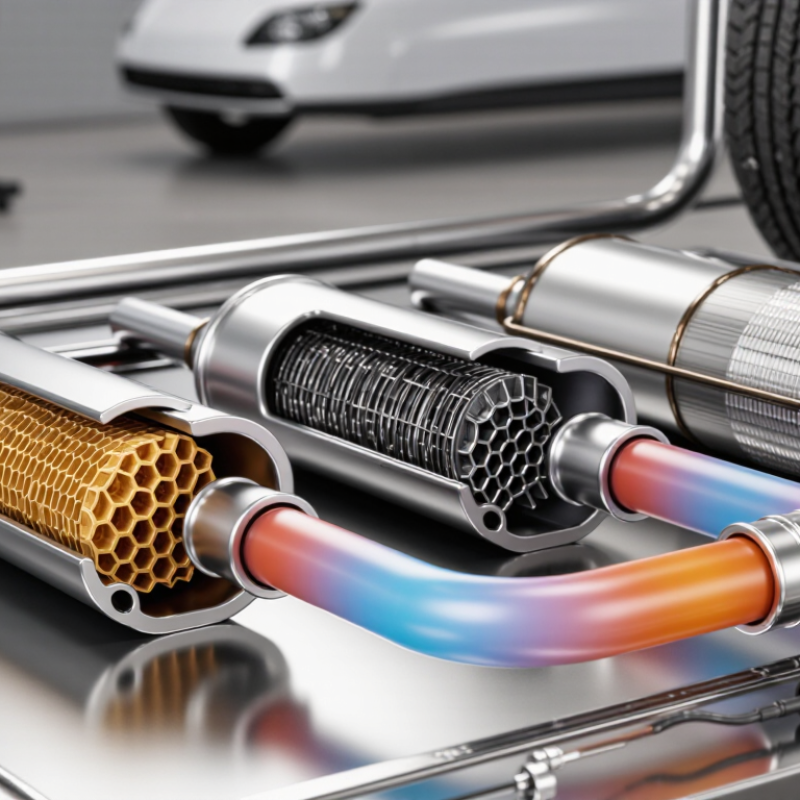
2026 Best Catalytic Converter Types for Engine Performance

Catalytic Converter Basics and Its Role in Engine Performance

Catalytic Converter Basics and Its Role in Engine Performance

A catalytic converter is an emissions-control device placed in the exhaust system. It uses coated internal materials to change harmful gases into less harmful compounds. In gasoline engines, a three-way converter can reduce carbon monoxide, hydrocarbons, and nitrogen oxides. Diesel systems may use oxidation converters with different operating functions.

Its effect on engine performance is indirect but important. A healthy converter allows exhaust gases to leave at the designed rate. If the internal honeycomb becomes blocked, backpressure can rise. The engine may then feel weak, especially during acceleration or hill climbing. Fuel consumption can increase. The exhaust area may also produce unusual heat or a sulfur-like smell.

Technicians often check oxygen-sensor readings, exhaust pressure, temperature differences, and fault codes together. One test rarely proves the cause. A damaged converter can result from misfiring, poor fuel control, or burning engine oil. Replacing it without fixing that problem may repeat the failure. That assumption is too simple. A high-flow converter is not automatically the best choice; engine calibration, converter size, temperature range, and legal emissions requirements all matter. During inspection, I would also listen for a loose rattling core, like small ceramic pieces inside a metal shell. Performance improvements should never be judged by sound alone.

Key Catalytic Converter Types for Different Engine Applications

Choosing a catalytic converter starts with the engine, not the vehicle’s price. Gasoline engines operating near a stoichiometric air-fuel ratio usually need a three-way catalytic converter. It targets carbon monoxide, hydrocarbons, and nitrogen oxides together. U.S. Environmental Protection Agency technical guidance reports conversion rates above 90% under suitable temperature and control conditions. Cold starts remain difficult. The catalyst needs heat before it works efficiently.

Diesel engines require a different treatment path. A diesel oxidation catalyst handles carbon monoxide and hydrocarbons, while a diesel particulate filter captures soot. Selective catalytic reduction systems then reduce nitrogen oxides during lean combustion. The International Council on Clean Transportation has reported that real-world diesel NOx emissions can substantially exceed laboratory results. Calibration, exhaust temperature, and maintenance matter greatly. A converter that looks clean may still perform poorly.

Lean-burn gasoline engines create another challenge. Their exhaust contains excess oxygen, which limits conventional three-way conversion. NOx storage catalysts or advanced reduction systems may be more suitable. Industry testing reports, including SAE technical studies, show that catalyst efficiency changes sharply with temperature, sulfur exposure, and aging. That detail is easy to overlook. In practice, application data should include engine load, exhaust temperature, fuel system type, and regulatory test cycle. The neatest category is not always the correct choice. Some installations need closer thermal analysis.

How Converter Design Affects Power, Emissions, and Fuel Efficiency

2026 Best Catalytic Converter Types for Engine Performance

Converter design directly shapes power, emissions, and fuel efficiency. A three-way catalytic converter uses a ceramic or metallic honeycomb substrate. More surface area improves gas contact, while lower restriction supports exhaust flow. However, an oversized cell structure may reduce cleaning efficiency during cold starts. That trade-off is easy to overlook. EPA technical materials report that properly operating three-way systems can reduce carbon monoxide, hydrocarbons, and nitrogen oxides by more than 90% under controlled conditions. Real driving is less perfect.

Diesel oxidation converters target carbon monoxide and hydrocarbons, while selective catalytic reduction systems address nitrogen oxides separately. Their effectiveness depends on temperature, oxygen balance, dosing accuracy, and sensor response. The EPA’s 2024 Automotive Trends Report shows that modern efficiency gains increasingly rely on coordinated engine and emissions control systems, not one component alone. A low-restriction metallic converter may preserve throttle response during high-load operation. Yet poor thermal management can increase fuel use during repeated short trips. The ICCT’s real-world emissions research also indicates that laboratory results can differ substantially from road performance. Engineers should measure backpressure, light-off time, and tailpipe emissions together. More power is not always cleaner.

2026 Best Catalytic Converter Types for Engine Performance

How converter design affects power, emissions, and fuel efficiency

Three-way catalysts provide the broadest emissions control on stoichiometric gasoline engines, while diesel oxidation catalysts and SCR systems are optimized for diesel exhaust. The values shown are representative engineering midpoints: actual light-off temperature and conversion efficiency vary with exhaust flow, catalyst loading, air-fuel ratio, temperature, and engine calibration. Lower light-off temperatures can reduce cold-start emissions, while efficient catalyst designs help limit exhaust restriction and avoid unnecessary fuel consumption.

Choosing the Right Catalytic Converter for Your Vehicle

Choosing the Right Catalytic Converter for Your Vehicle

The best catalytic converter depends on your engine, exhaust layout, and emissions requirements. A high-flow design may support performance, but it is not automatically the right choice. Your vehicle needs a converter with the correct pipe diameter, sensor ports, heat range, and substrate design. Ceramic substrates are common and efficient, while metallic substrates can tolerate harsher conditions. The final choice should match the engine’s calibration, not just a seller’s performance claim.

Before replacement, inspect the cause of failure. A misfire, leaking injector, or burning oil can quickly damage a new converter. I have seen converters glow red after short drives because an engine problem was ignored. A scan tool, exhaust temperature reading, and visual inspection can reveal useful clues. Check the inlet and outlet temperatures after warm-up. A qualified technician should also verify that the replacement meets applicable emissions standards and fits securely without exhaust leaks.

Tips: Choose a direct-fit converter when available. Confirm the engine size and model year carefully. Keep the invoice and certification details. Do not assume more airflow means better fuel economy. Sometimes, I still find the “perfect” choice is imperfect after installation, so recheck warning lights, fuel trims, and road performance. Proper diagnosis matters more than an impressive specification.

Installation, Maintenance, and Performance Evaluation Criteria

Choosing the best catalytic converter in 2026 requires more than matching pipe diameter. Installation quality often decides real engine performance. The converter should sit close enough to reach operating temperature quickly, while maintaining safe clearance from wiring and heat-sensitive components. EPA technical guidance reports that a functioning three-way catalyst can reduce carbon monoxide, hydrocarbons, and nitrogen oxides by more than 90%. Poor sealing can erase much of that benefit.

A performance evaluation should include exhaust temperature, oxygen-sensor readings, backpressure, and diagnostic trouble codes. Catalyst light-off commonly begins near 250–350°C, according to SAE technical literature. A healthy unit usually shows a clear temperature rise across its body after warm-up. Excessive backpressure suggests restriction, not improved filtration. I have seen engines feel weaker after installation because the converter was oversized or poorly matched. Bigger is not always better.

Tips: Inspect the gasket surfaces carefully. Use a calibrated torque wrench. Check for exhaust leaks before testing. Maintain proper ignition, fuel, and oil control, because contamination can damage the catalyst quickly. CARB emissions testing guidance also emphasizes application-specific certification, so verify local compatibility before installation. Maintenance should include periodic scan-tool checks and visual inspection for rattling, discoloration, or impact damage. A perfect test is rare; repeated measurements are more trustworthy than one impressive reading.

FAQS

Which catalytic converter suits a gasoline engine with a near-stoichiometric mixture?

A three-way catalytic converter is usually suitable. It targets carbon monoxide, hydrocarbons, and nitrogen oxides together. It needs sufficient heat. Cold starts can reduce early efficiency.

Why do diesel engines need more than one exhaust component?

Diesel exhaust treatment often uses separate stages. An oxidation catalyst handles carbon monoxide and hydrocarbons. A particulate filter captures soot. A reduction system then controls nitrogen oxides during lean combustion.

Is a conventional three-way converter suitable for every gasoline engine?

No. Lean-burn gasoline engines contain excess oxygen in their exhaust. That oxygen can limit conventional three-way conversion. A storage catalyst or advanced reduction system may fit better.

What information should be checked before selecting a converter?

Confirm engine size, model year, exhaust layout, and pipe diameter. Check sensor ports, heat range, substrate type, and emissions requirements. Application data should include engine load and exhaust temperature. Details matter.

Are ceramic and metallic substrates interchangeable?

Not always. Ceramic substrates are common and efficient. Metallic substrates can tolerate harsher conditions. The correct choice depends on temperature, space, calibration, and exhaust design.

Can a high-flow converter improve fuel economy automatically?

No. Higher airflow does not guarantee better fuel economy. Performance claims may overlook calibration and emissions control. Sometimes, the impressive specification disappoints.

What should be inspected before replacing a failed converter?

Check for misfires, leaking injectors, and burning oil. These problems can damage a replacement quickly. Use scan data, temperature readings, and visual inspection. A red-hot converter is a warning sign.

How can proper operation be confirmed after installation?

Check inlet and outlet temperatures after warm-up. Recheck warning lights, fuel trims, and road performance. Inspect for exhaust leaks and secure mounting. The installation may seem perfect, but rechecking still matters.

Conclusion

Catalytic converters are essential components of modern exhaust systems, converting harmful gases into less damaging emissions while influencing overall engine performance. How do catalytic converters affect engine performance? Their internal structure, catalyst loading, flow capacity, and temperature range can affect exhaust backpressure, throttle response, fuel efficiency, and emission control. Different converter designs are suited to various engine sizes, fuel systems, operating temperatures, and vehicle applications, so selecting the correct type requires attention to compatibility, legal emissions requirements, and the engine’s intended use.

This guide explains how converter design balances power, emissions, durability, and fuel economy. It also covers practical criteria for choosing a replacement, including size, substrate construction, heat resistance, sensor compatibility, and installation fitment. Proper installation is important for preventing leaks and ensuring efficient operation, while regular inspections can identify overheating, blockage, physical damage, or declining performance. Evaluating acceleration, fuel consumption, exhaust readings, and warning indicators can help confirm whether the catalytic converter is functioning effectively without compromising engine reliability.

Mason

Mason

Mason is a seasoned marketing professional with a deep expertise in the company's offerings and a passion for driving brand awareness. With a strong background in digital marketing strategies, he has an innate ability to connect with diverse audiences and effectively communicate product benefits.......