Catalytic converters are crucial in reducing vehicle emissions, a pressing concern in today's automotive industry. According to the Environmental Protection Agency (EPA), transportation contributes to nearly 29% of greenhouse gas emissions in the U.S. alone. This alarming statistic highlights the urgent need for technologies that mitigate environmental impact. How do catalytic converters reduce vehicle emissions? They facilitate chemical reactions that convert harmful substances like carbon monoxide and nitrogen oxides into less harmful emissions.
The technology behind catalytic converters involves precious metals, such as platinum, palladium, and rhodium. These metals act as catalysts to accelerate reactions, transforming toxic pollutants before they exit the exhaust system. Studies show that modern catalytic converters can reduce emissions by over 90%, showcasing their effectiveness. However, the complexity of these systems raises questions. Are they always efficient? Factors like temperature and fuel quality play a vital role in performance.
In addition, not all vehicles are equipped with advanced catalytic systems. This inconsistency can lead to varied emission levels across different models. The challenge lies in improving converter technology while ensuring widespread adoption. Thus, ongoing research is essential for developing more reliable solutions to combat vehicular emissions effectively.
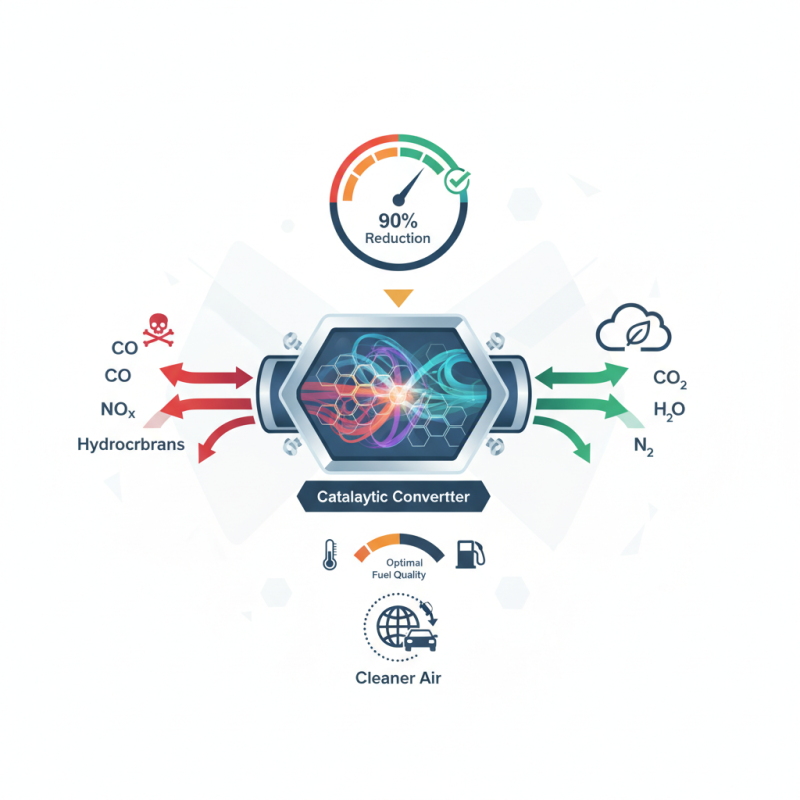
Catalytic converters play a crucial role in reducing vehicle emissions. They contain several key components that work together. The main elements include the catalyst, substrate, and housing. The catalyst typically comprises platinum, palladium, and rhodium. These metals initiate chemical reactions that convert harmful gases into less harmful emissions.
The substrate provides a large surface area for the catalytic reactions. It is usually made from ceramic or metallic materials. This design maximizes efficiency, allowing for higher exhaust flow rates. Furthermore, the housing protects the internal components from damage and ensures proper heat retention. According to the Environmental Protection Agency (EPA), catalytic converters can reduce carbon monoxide emissions by up to 90%.
Tips: Regular maintenance of your vehicle can enhance the efficiency of the catalytic converter. Check the exhaust system for any leaks.
While catalytic converters are effective, they are not infallible. Over time, they can become clogged or damaged. This degradation can lead to decreased performance and higher emissions. It’s essential to address warning signs such as unusual exhaust noises or reduced power. Consistent inspections can help ensure your vehicle remains compliant with emission standards.
| Component | Function | Emissions Reduced |
|---|---|---|
| Catalytic Element | Facilitates chemical reactions to convert harmful gases | Carbon monoxide, hydrocarbons, nitrogen oxides |
| Substrate | Provides a surface for catalysts to operate efficiently | Supports the reduction of CO and NOx emissions |
| Oxygen Sensors | Monitors the oxygen levels in exhaust gases | Enables optimal conversion of pollutants |
| Heat Shield | Protects the catalytic converter from excessive heat | Maintains efficiency and longevity |
| Tailpipe | Discharges treated gases into the atmosphere | Final reduction of harmful emissions |
: Catalytic converters transform harmful vehicle gases into less harmful substances, significantly reducing emissions.
They use noble metals to facilitate chemical reactions, converting gases like carbon monoxide into safer compounds.
Regular servicing ensures optimal performance. Neglecting maintenance can lead to larger emission problems over time.
They significantly cut down on carbon monoxide, nitrogen oxides, and unburned hydrocarbons.
No, many older vehicles lack this essential technology, affecting overall emissions reduction efforts.
Ineffective converters can cause emissions to exceed legal thresholds, contributing to air quality issues.
It converts carbon monoxide into carbon dioxide, a less harmful gas when released into the atmosphere.
Yes, some pollutants can escape, indicating the technology is not perfect and requires ongoing enhancements.
The effectiveness of catalytic converters heavily relies on engine performance and the quality of fuel used.
Timely maintenance and awareness of emissions systems foster responsibility and promote better air quality.
Catalytic converters play a crucial role in reducing vehicle emissions by facilitating chemical reactions that convert harmful pollutants into less harmful substances. They consist of several key components, including catalysts such as platinum, palladium, and rhodium, which accelerate these reactions. The primary function of a catalytic converter is to transform carbon monoxide, hydrocarbons, and nitrogen oxides into carbon dioxide, nitrogen, and water vapor, thus significantly lowering the amount of toxic emissions produced by internal combustion engines.
The importance of these devices extends beyond vehicle mechanics, as they contribute positively to environmental air quality by mitigating the release of dangerous pollutants into the atmosphere. Regulatory standards emphasize the need for effective emission control systems in vehicles, making catalytic converters not just beneficial but essential for compliance and public health. In summary, understanding how do catalytic converters reduce vehicle emissions reveals their vital role in promoting cleaner air and addressing environmental concerns.

 GLX Auto Parts