Choosing exhaust tips is not only a styling decision. The right design should complement the vehicle while supporting reliable, practical use.
This guide explains how to choose exhaust tips for appearance and function. It considers inlet diameter, outlet shape, material, installation method, heat resistance, and maintenance needs. A polished stainless steel tip can brighten a dark bumper, while a matte finish may suit an understated build. Small details matter.
Fitment comes first. Measure the existing pipe carefully, including its outside diameter and available clearance. A tip that looks impressive online may contact the bumper or sit unevenly after installation. I have seen attractive parts lose their appeal because clamps were visible or the outlet extended too far. That is worth checking.
Material also affects long-term value. Stainless steel generally resists corrosion better than ordinary coated steel, especially in wet or salted environments. However, not every stainless product has the same quality. Check the manufacturer’s specifications, weld finish, wall thickness, and warranty before purchasing. Titanium and carbon-fiber-style products may look distinctive, but their price and heat-management requirements deserve attention.
Sound expectations should remain realistic. Exhaust tips can slightly influence the character of an outlet, but they rarely transform a vehicle’s sound alone. Any modification should preserve safe clearance and comply with applicable vehicle, noise, and emissions requirements. Local rules vary.
The best choice balances proportion, durability, installation quality, and personal taste. A perfect-looking tip is still a poor choice if it rusts quickly, rattles, or requires constant cleaning. Consider the whole vehicle, not just the rear bumper. Even experienced enthusiasts sometimes overlook that.
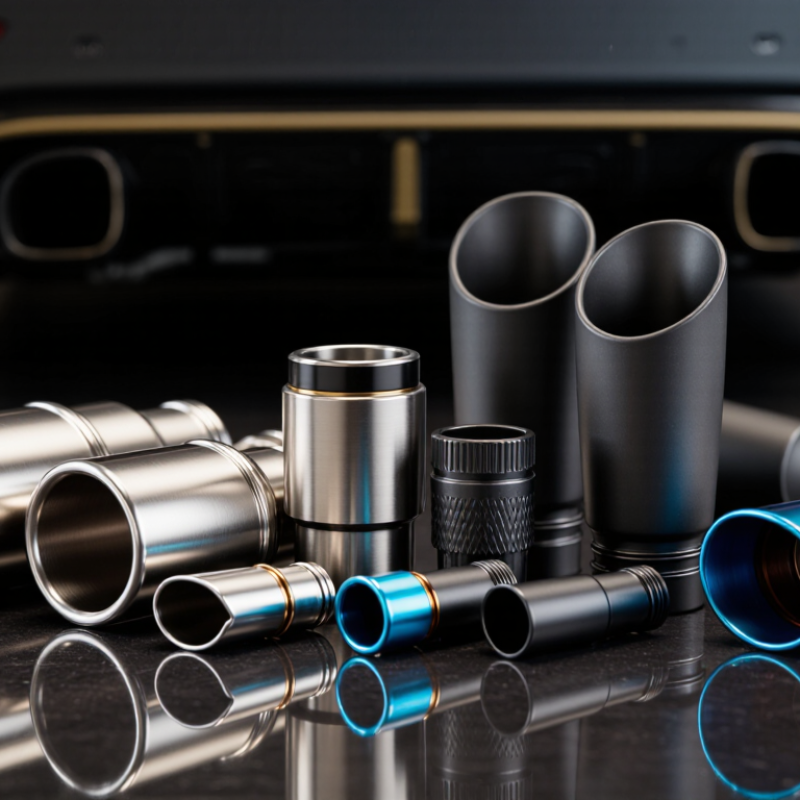
Choosing an exhaust tip starts with understanding its design, not its shine. A clamp-on tip suits reversible installation and uses a fastener around the tailpipe. A weld-on tip looks cleaner, but it demands accurate cutting and corrosion protection. Bolt-on designs can simplify replacement, although their brackets may loosen under vibration.
Outlet shape changes the visual character. A rolled edge appears softer and can reduce a sharp metal feel. A slash-cut outlet looks more aggressive and exposes more surface to view. A turn-down tip directs gases toward the ground, but clearance and heat protection still matter. Dual-wall tips add depth and help reduce visible discoloration. Fitment comes first. Measure inlet diameter, outlet length, bumper clearance, and pipe angle before buying.
Function needs realistic expectations. Most tips create a small acoustic or airflow effect, not a major power increase. An overly narrow outlet can create restriction, especially on a high-flow system. The SAE J1163 exhaust measurement practice shows why installation position and measurement conditions affect sound results. Meanwhile, the SEMA Market Report recorded about $52.65 billion in U.S. specialty-equipment sales in 2023, showing strong demand for appearance and performance upgrades. That figure does not prove every accessory improves performance. EPA’s Automotive Trends Report also places average new-vehicle fuel economy near 26.4 mpg for model-year 2022, a reminder that a decorative tip cannot replace engineered efficiency. In workshop inspections, small alignment errors often look worse than expected. I still underestimate them sometimes. A three-millimeter offset can make a polished tip appear crooked.
Choosing an exhaust tip starts with its material, not its shine. Stainless steel remains a practical choice for wet climates and daily driving. ASTM A240 covers common stainless grades, including chromium-based corrosion resistance. According to ASM Handbook data, 304 stainless steel conducts heat at roughly 16 W/m·K near room temperature. Carbon steel transfers heat faster, near 50 W/m·K, but usually needs stronger surface protection. These figures matter near a bumper or heat-sensitive trim.
Titanium is lighter and transfers heat more slowly, at about 7 W/m·K, according to ASM material data. It can reduce surface heat transfer, but it costs more and may show heat coloring. That coloring is not always damage. However, poor fitment can still create rattles, soot trails, or uneven heating. SAE exhaust-system research consistently treats temperature cycling, vibration, and corrosion as connected durability risks. Material choice alone cannot fix weak welds or excessive movement. That is an easy detail to overlook.
Tips: For frequent rain, choose properly welded stainless steel and inspect the inner seam twice yearly. For high-heat use, consider titanium only when weight and heat management justify the price. Avoid assuming a polished finish means long life. Carbon steel can work, but chipped coatings demand prompt attention. I would also measure clearance with the engine hot, not cold. The result may be less perfect, but it reflects real driving conditions.
| Tip Material | Typical Heat Resistance | Durability and Corrosion Behavior | Appearance | Maintenance Needs | Best Use Case | Important Considerations |
|---|---|---|---|---|---|---|
| 304 Stainless Steel | Suitable for normal passenger-vehicle exhaust temperatures when properly fitted and ventilated. | Strong resistance to moisture and road corrosion; generally more durable than ordinary carbon steel. | Bright silver finish; can be polished or brushed. | Usually low maintenance. Wash away road salt and remove soot with a non-abrasive cleaner. | Daily drivers, touring vehicles, and wet or winter climates. | May discolor from repeated high heat, especially near high-output or modified engines. |
| 409 Stainless Steel | Handles exhaust heat effectively in many original-equipment-style applications. | Good heat tolerance and useful structural strength; surface oxidation or brown discoloration can develop over time. | Typically a muted gray or lightly brushed appearance. | Simple cleaning is normally sufficient; surface discoloration does not always indicate structural failure. | Practical replacements where function and value are more important than a mirror finish. | Less visually corrosion-resistant than 304 stainless steel, particularly in salty environments. |
| Aluminized Steel | Appropriate for many standard exhaust systems, but coating life depends on temperature and exposure. | Aluminum-silicon coating helps protect the steel substrate; scratches, weld areas, and salt exposure can accelerate corrosion. | Dull metallic gray with a utilitarian appearance. | Keep clean and inspect coating damage, seams, and mounting points regularly. | Budget-conscious vehicles used in moderate climates. | Not as corrosion-resistant as stainless steel once the protective coating is damaged. |
| Carbon Steel with High-Temperature Coating | Can tolerate substantial heat if the coating is rated for exhaust use and applied correctly. | Underlying steel can rust quickly when the coating chips, cracks, or is exposed to moisture. | Usually matte black or dark gray. | Inspect for chips, scratches, and rust; touch-up products must be compatible with exhaust temperatures. | Off-road, performance-inspired, or dark-themed builds where appearance is a priority. | Coating quality and surface preparation strongly affect service life. |
| Titanium | Very good heat capability with low thermal mass; exact limits depend on alloy, thickness, and design. | Excellent resistance to many forms of corrosion and considerably lighter than steel. | Can develop blue, purple, or gold heat coloration; often selected for a technical appearance. | Use gentle, non-chloride cleaners; avoid abrasive polishing that can alter the surface color. | Weight-sensitive performance projects and premium custom applications. | High cost, specialized fabrication requirements, and potential cosmetic heat staining. |
| Nickel-Plated Steel | Suitable for moderate exhaust heat when the plating system is designed for the application. | Plating can improve surface appearance and corrosion resistance, but peeling or damage exposes the steel beneath. | Bright, polished metallic appearance. | Clean with mild products and avoid harsh abrasives that can scratch or remove the finish. | Show-oriented vehicles and street cars seeking a bright finish. | Surface quality depends heavily on plating preparation, thickness, and exposure to heat and salt. |
| Chrome-Plated Steel | Can be used on conventional exhaust tips, but repeated severe heat may cause discoloration or finish degradation. | Hard decorative surface resists light wear; corrosion can spread beneath damaged or poorly sealed plating. | Highly reflective, mirror-like finish. | Dry after washing, remove water spots, and avoid abrasive cleaners or metal tools. | Street vehicles where bright visual impact is more important than minimum maintenance. | Inspect edges and weld areas because damage or heat cracking can lead to flaking and rust. |
Note: Actual exhaust-tip temperature varies with engine load, exhaust routing, insulation, airflow, wall thickness, and vehicle calibration. Always follow the component manufacturer’s temperature and installation instructions.
Choosing an exhaust tip starts with fit, not appearance. Measure the tailpipe’s outer diameter with a caliper, then match it to the tip’s inlet size. A secure fit prevents rattling, shifting, and uneven exhaust flow. Measure twice.
Vehicle fit also depends on length, angle, and bumper clearance. Check the exact model year and body style before ordering. Some tailpipes sit deep inside the bumper, while others extend outward. A larger outlet may look stronger, but it does not automatically increase engine performance. Leave enough space around plastic, paint, and heat-sensitive trim. Poor clearance can cause discoloration or melting after repeated driving.
I once assumed a universal tip would fit every similar vehicle. It did not. The inlet was correct, but the mounting position looked awkward and required adjustment. That mistake changed how I check fitment. I now inspect the pipe shape, available straight section, clamp location, and visible clearance from several angles. Stainless steel usually handles moisture and road salt well, while thicker walls can resist dents. Still, material alone is not proof of quality. Examine the welds, clamp hardware, and edge finish. When measurements seem uncertain, an experienced exhaust technician can confirm compatibility before installation. A careful fitting process may take longer, but it avoids buying a part that only looks suitable online.
Choosing exhaust tips is not only a styling decision. The right pair should complement your vehicle’s exhaust system, driving habits, and desired sound.
Sound changes with design, but tips rarely transform a quiet system into a loud one. Short, wide outlets may create a sharper exhaust note. Longer or angled tips can soften the tone slightly. In my experience, sound also depends on the muffler, pipe diameter, and engine load. I once chose oversized tips for appearance. They looked aggressive, but the tone barely changed. I had focused too much on the rear view.
Appearance still matters. Measure the existing pipe before ordering, then check the bumper opening and clearance. A polished finish reflects light clearly, while a brushed surface hides small marks better. Black coatings can look clean, but they may show heat discoloration over time. Keep the proportions balanced. Very large tips can make a compact rear design appear crowded.
Performance requires more caution. The tip should fit securely without restricting the outlet. A much smaller opening may disturb gas flow and increase heat near the rear section. However, a larger tip does not automatically create more power. That idea is easy to believe, but it is incomplete. For reliable fitment, inspect clamp strength, weld quality, wall thickness, and corrosion resistance. Leave enough space around plastic trim. Exhaust components become extremely hot. An experienced installer can also check alignment, leaks, and vibration after fitting.
Choose an exhaust tip that matches your pipe diameter and available clearance. A stylish finish means little if it touches the bumper or transfers heat to nearby plastic. Measure the outlet when the exhaust is completely cool. Check the tip’s material, clamp design, and weight before installation. Stainless steel usually handles moisture well, while coated finishes need careful cleaning. Compatibility matters more than appearance.
Work outdoors or in a well-ventilated area. Let the exhaust cool fully, then wear gloves and eye protection. Use wheel chocks and properly rated jack stands if lifting the vehicle. Never depend on a jack alone. Slide the tip over the pipe, keep the opening aligned, and tighten the clamp evenly. Follow the supplied torque guidance when available. Leave safe space around body panels and heat shields. Start the engine briefly and listen for rattling or escaping exhaust.
Maintenance is simple but easy to neglect. Inspect the clamp after the first few drives, especially after rough roads or strong temperature changes. Look for soot marks, rust, looseness, or a shifted position. Clean the surface with mild soap and a soft cloth. Avoid harsh abrasives that can scratch protective coatings. A careful installer can still miss a small clearance problem. I would recheck it after the exhaust has cooled, not just trust the first inspection. Seek qualified help if the pipe is damaged, welded, or difficult to secure safely.
Measure the inlet diameter, outlet length, pipe angle, and bumper clearance. Check clearance when the engine is hot. Cold measurements can mislead.
A clamp-on tip uses a fastener around the tailpipe. It suits reversible installation and usually avoids cutting. Check the fastener regularly.
A weld-on tip can look cleaner and more permanent. It requires accurate cutting, careful alignment, and corrosion protection. Small errors remain visible.
A rolled edge looks softer and reduces the sharp metal feel. A slash-cut outlet appears more aggressive. A turn-down outlet directs gases toward the ground.
Usually, no. Most tips create small airflow or sound changes, not major power gains. An overly narrow outlet may restrict a high-flow system.
Properly welded stainless steel is a practical choice for frequent rain. Inspect the inner seam twice yearly. A polished surface does not guarantee long life.
Titanium is lightweight and transfers heat more slowly than many steels. It may justify the cost during high-heat use. Heat coloring can appear without indicating damage.
Poor fitment can create rattles, soot trails, uneven heating, or a crooked appearance. A three-millimeter offset may look surprisingly obvious. I still underestimate this sometimes.
Choosing the right exhaust tip requires more than selecting an attractive shape. To understand how to choose exhaust tips for appearance and function, begin by comparing common designs, such as single-wall, double-wall, angled-cut, and rolled-edge tips. Consider materials based on your priorities: stainless steel offers durability and corrosion resistance, while other finishes may provide a different visual effect but require more maintenance. Size is equally important, since the tip should fit the exhaust pipe securely and suit the vehicle’s bumper openings without creating clearance or heat issues.
A well-chosen exhaust tip can complement the vehicle’s style and subtly influence its sound, but it should not restrict exhaust flow or reduce overall performance. Look for a design that balances appearance, sound character, heat management, and practical durability. During installation, ensure the tip is firmly secured, correctly aligned, and safely positioned away from body panels and surrounding components. Regular cleaning and inspections can help preserve its finish and reveal looseness, corrosion, or damage before these problems become serious.

GLX Auto Parts