Top Exhaust System Manufacturers How to Choose a Supplier?

Time:2026-11-08 Author:Amelia
0%

Choosing an exhaust system supplier affects far more than purchase price. It can shape durability, noise control, emissions performance, and production reliability. OICA reported 93.5 million motor vehicles produced worldwide in 2023, highlighting the scale and complexity of automotive supply chains. That matters. Meanwhile, the International Energy Agency’s Global EV Outlook 2024 reported nearly 14 million electric car sales in 2023. As powertrains evolve, suppliers must adapt their product portfolios and manufacturing plans.

For buyers comparing top exhaust system manufacturers, evidence is more useful than polished claims. Look for relevant engineering capability, documented quality systems such as IATF 16949, material traceability, and testing that reflects real operating conditions. Ask how the company validates welds, corrosion resistance, fit, and noise performance. Details matter. A polished brochure can still hide a weak validation plan, and a large factory does not guarantee responsive technical support. How to choose reliable exhaust system manufacturers depends on the application, order volume, target markets, and required service life. Request sample inspection records, production references, and clear answers about tooling, lead times, and change control. Industry reports provide context, but they cannot verify a supplier’s actual performance. That requires careful review. This guide introduces leading manufacturers and practical ways to assess their capabilities, compare quotations, and reduce avoidable sourcing risks. Even a strong supplier may not fit every project; buyers should test assumptions before committing.
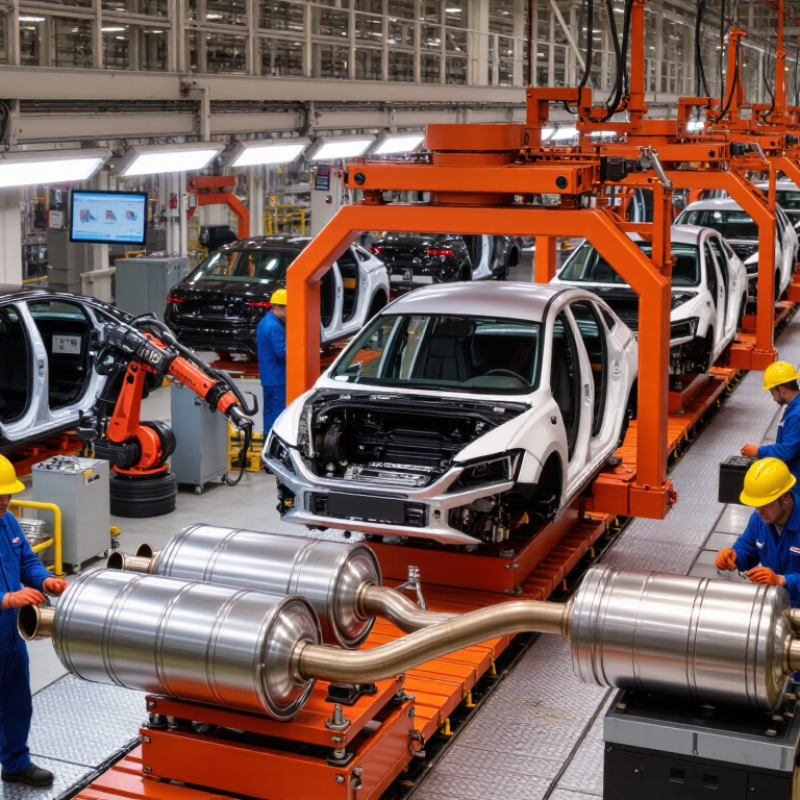
Top Exhaust System Manufacturers How to Choose a Supplier?

Exhaust System Manufacturers: Industry Scope and Role

Exhaust system manufacturers do more than bend pipes and fit silencers. Their work covers exhaust manifolds, tubing, mufflers, catalytic converters, particulate filters, and related thermal and acoustic engineering. Components must withstand vibration, heat cycles, corrosion, and tight underbody clearances. A few millimeters can affect fit on the assembly line.

The scale is substantial. OICA reported 93.5 million motor vehicles produced worldwide in 2023. That volume supports demand for original equipment systems, replacement parts, and production tooling. Manufacturers also coordinate with vehicle engineers on airflow, back pressure, noise, durability, and emissions performance. Their role is practical: design parts that fit, perform consistently, and can be made at scale. Small details matter.

The market is changing. The IEA’s Global EV Outlook 2024 reported nearly 14 million electric car sales in 2023, about 18% of global car sales. This shift changes the mix of exhaust-system demand, while combustion-engine vehicles still require extensive exhaust hardware. Suppliers therefore assess both current production needs and longer-term platform changes. A polished specification is not enough. Real-world corrosion, repair access, and assembly variation can expose weaknesses that tests miss; suppliers should be willing to revisit designs when field evidence disagrees.

Exhaust System Manufacturers: Industry Scope and Role

How tightening emissions requirements shape exhaust-system supplier selection

What this means for buyers: The Euro 6 limit is lower than the Euro 5 limit, highlighting the importance of a supplier’s emissions-control engineering, testing capability, and regulatory compliance support.

Data: European Union type-approval limits for diesel passenger cars—Euro 5: 180 mg/km; Euro 6: 80 mg/km. These are regulatory limits, not measured real-world emissions.

Main Exhaust System Types and Their Applications

Exhaust systems vary with engine type, duty cycle, and packaging space. Passenger cars commonly use single-exit systems, with pipes, mufflers, and catalytic converters tuned for low noise and controlled emissions. Larger engines may use dual branches for packaging or flow needs; two outlets do not automatically mean better performance. Fit matters. Check pipe diameter, sensor locations, and mounting points against the vehicle’s original layout.

Diesel trucks and buses need more than a muffler. Their aftertreatment can combine a diesel oxidation catalyst, diesel particulate filter, and selective catalytic reduction system. The U.S. Environmental Protection Agency’s 2007 heavy-duty diesel rule set standards intended to cut particulate matter by 90% and nitrogen oxides by 95% compared with earlier levels. These targets explain why replacement parts must match the engine and emissions configuration. A mismatched filter or sensor can cause warning lights and poor operation.

Off-road machinery and generators often use compact, heat-resistant assemblies designed for long, steady workloads. Marine systems need corrosion-resistant materials and careful routing around hot surfaces. Meanwhile, the International Energy Agency’s Global EV Outlook 2024 reports nearly 14 million electric cars sold worldwide in 2023; battery-electric vehicles have no tailpipe exhaust. For suppliers, ask for documented material grades, fitment checks, and test procedures. A polished specification sheet helps, but it cannot replace checking the actual application.

Leading Manufacturers and Their Areas of Specialization

Leading exhaust manufacturers tend to specialize by system complexity, material, and production volume. Large systems suppliers engineer complete assemblies, including manifolds, pipes, silencers, and emissions-control components. Their strength is coordinating parts that must fit tightly beneath a vehicle and withstand heat, vibration, and corrosion. Specialist fabricators often focus on formed stainless-steel tubing, custom bends, or smaller production runs. That can suit niche vehicle platforms, where catalog parts rarely fit. The scale is substantial: OICA reported 93.5 million motor vehicles produced worldwide in 2023. Fit matters.

A supplier’s specialty should match the project. Ask for material specifications, dimensional drawings, corrosion-test methods, and evidence of repeatable quality checks. For high-volume programs, also examine manufacturing capacity and how design changes are handled. For low-volume work, request a sample assembly and check weld consistency, flange alignment, and clearance around nearby components. A polished brochure is not proof. The IEA’s Global EV Outlook 2024 reported nearly 14 million electric-car sales in 2023, about 18% of the market. That shift may reshape long-term demand for conventional exhaust parts, though combustion vehicles remain a major production segment. Supplier categories also overlap; a specialist may provide design support, while a large supplier may outsource fabrication. The distinction is not always neat.

Top Exhaust System Manufacturers: How to Choose a Supplier? — Leading Manufacturer Types and Their Areas of Specialization
Manufacturer Type Typical Area of Specialization Common Applications Capabilities to Verify Useful Supplier-Selection Checks
Original-equipment system manufacturers Exhaust systems engineered to meet a vehicle maker’s fit, durability, noise, and emissions requirements. Passenger cars, light commercial vehicles, and vehicle platforms produced at scale. Vehicle-specific engineering, production traceability, quality-management processes, and coordination with vehicle assembly requirements. Confirm the supplier can meet the required drawings, validation plan, production volume, change-control process, and delivery schedule.
Aftermarket replacement manufacturers Replacement components designed for service and repair, including pipes, mufflers, resonators, and catalytic-converter assemblies. Passenger and light commercial vehicles requiring maintenance or replacement parts. Vehicle fitment coverage, dimensional consistency, corrosion protection, installation documentation, and parts-availability support. Check fitment data for the exact vehicle configuration, warranty terms, product testing, and compliance with local regulations.
Performance exhaust specialists Systems and components developed around sound characteristics, airflow, packaging, and performance goals. Modified road vehicles, motorsport applications, and specialist vehicle builds. Materials and weld-quality controls, documented fitment, noise testing, and clear specification of intended use. Confirm road-use legality where applicable, sound limits, emissions requirements, installation needs, and compatibility with the vehicle.
Commercial-vehicle exhaust manufacturers Exhaust assemblies and related hardware designed for heavy-duty operating conditions and vehicle-specific packaging. Trucks, buses, vocational vehicles, and other commercial fleets. Durability testing, service-part support, corrosion-resistance options, and experience with fleet maintenance requirements. Review operating-condition requirements, expected service support, replacement-part lead times, and documentation for fleet procurement.
Exhaust aftertreatment system specialists Integrated emissions-control equipment, which may include catalytic converters, diesel particulate filters, and selective catalytic reduction components. Vehicles and engines subject to regulated exhaust-emissions limits. Application-specific engineering, emissions validation, sensor and control-system integration, and regulatory documentation. Verify the system is approved for the intended engine and jurisdiction, and request relevant test evidence and installation requirements.
Custom exhaust fabricators Made-to-order pipes, manifolds, brackets, and complete assemblies for non-standard layouts or low-volume projects. Special-purpose vehicles, prototypes, restoration projects, and equipment with unusual packaging. Drawing interpretation, material selection, forming and welding processes, dimensional inspection, and prototype support. Agree on material grade, tolerances, inspection records, prototype sign-off, production capacity, and ownership of design changes.
Selection note: These are industry supplier categories, not a ranking of individual companies. The best fit depends on vehicle or engine application, required certifications, production volume, local emissions rules, quality documentation, and after-sales support.

Key Criteria for Evaluating Exhaust System Suppliers

A dependable exhaust system supplier should match the application, not just offer a low unit price. Check pipe diameter, routing, operating temperature, vibration exposure, and available installation space. Ask whether materials and wall thickness suit the expected conditions. Inspect sample joints and welds for consistent coverage, clean edges, and obvious defects. Small details matter.

Tips: Request a sample and a recent inspection record. Compare promised lead times with actual delivery history. Ask how the supplier handles out-of-spec parts, and get the response process in writing.

Evaluate production control as carefully as product design. Look for documented checks at incoming material, forming, welding, and final inspection. Ask for batch traceability and clear measurement records. A polished sample is useful, but it may not represent routine production. That is easy to overlook. Review capacity, communication speed, and change-management practices before committing. A scorecard helps, though it can create false confidence if the weights are arbitrary. Speak with technical and quality staff, not only sales contacts. Share drawings and performance targets, then assess whether the supplier asks precise questions about fit, noise, durability, and testing. Their answers reveal more than a brochure.

How to Verify and Select a Suitable Supplier

A supplier’s brochure is a starting point, not proof. OICA’s 2024 production statistics report 93.5 million motor vehicles produced worldwide in 2023. That scale makes capacity claims worth checking against line rates, shift records, and recent delivery performance. Ask for a dated capacity study, not a polished slide. Numbers matter.

The IEA’s Global EV Outlook 2024 reports 14 million electric-car sales in 2023, about 18% of global sales. This shift makes a supplier’s product roadmap and tooling flexibility relevant, even when you need parts for combustion or hybrid vehicles today. Request traceability records for steel and catalysts, weld inspection results, corrosion and thermal-cycle test data, and documented noise and emissions validation. Check that quality certificates cover the actual production site and processes. Run a pilot order, then inspect fit, finish, and delivery consistency across several batches. Ask how warranty rates are calculated; a percentage without units or a time period tells little. I would still treat a clean audit cautiously. Paperwork can miss a weak night shift. Test the parts.

FAQS

What should an exhaust system supplier specialize in?

Some suppliers build complete assemblies, including manifolds, pipes, silencers, and emissions-control components. Others focus on stainless-steel tubing or custom bends. Fit matters.

How can I check whether a system will fit my vehicle?

Compare dimensional drawings with the available space beneath the vehicle. Check flange alignment, pipe routing, and clearance near nearby components. A sample assembly can reveal problems.

Which material details should I ask about?

Request material specifications, wall thickness, and corrosion-test methods. These details help show whether parts suit heat, vibration, and exposure to corrosion.

How do I assess production quality?

Ask for inspection records covering incoming materials, forming, welding, and final checks. Look for consistent welds, clean edges, and batch traceability. Records can be incomplete, too.

Is a polished sample enough to trust a supplier?

Not by itself. A sample may not represent routine production, so ask how quality checks are repeated across batches.

What should I ask about delivery and defects?

Compare promised lead times with actual delivery history. Ask what happens when a part falls outside specifications, and get the response process in writing.

How should I evaluate a supplier for a large production program?

Check manufacturing capacity, repeatable quality controls, and how design changes are handled. A scorecard may help, but arbitrary weights can mislead.

What can supplier discussions reveal?

Share drawings and performance targets, then listen for precise questions about fit, noise, durability, and testing. Sales answers alone may leave gaps.

Conclusion

Exhaust system manufacturers serve a broad range of industries, producing components that manage and direct exhaust flow in vehicles, industrial equipment, and other applications. Different systems are designed for specific operating conditions, such as passenger transport, heavy-duty use, or stationary machinery. Understanding these applications helps buyers compare suppliers whose production capabilities and technical focus match their project requirements.

How to choose reliable exhaust system manufacturers depends on more than product range. Evaluate material quality, engineering expertise, manufacturing capacity, customization options, quality-control procedures, delivery reliability, and after-sales support. Before selecting a supplier, confirm relevant certifications and production experience, review product specifications and sample documentation, and discuss communication, lead times, and service expectations. A careful comparison of these factors can help identify a supplier that meets performance needs and supports dependable, long-term cooperation.

Amelia

Amelia

Amelia is a seasoned marketing professional with a wealth of expertise in our company’s core offerings. With an unwavering passion for driving growth and innovation, she plays a pivotal role in shaping our marketing strategies and enhancing brand visibility. A key aspect of her responsibilities......