How does temperature affect exhaust parts? The answer depends on heat intensity, exposure time, and repeated heating and cooling. SAE technical literature on engine and aftertreatment systems shows why operating conditions matter: exhaust temperatures vary widely with engine load, fuel, and component location. In practical terms, a manifold can glow under sustained heavy load, while a catalytic converter needs high operating temperatures to reduce emissions. Exact readings differ by vehicle, so manufacturer service data is the safest reference.
The U.S. Environmental Protection Agency’s technical reports on vehicle emissions describe catalytic aftertreatment as a temperature-dependent process. That has a direct effect on durability. Repeated thermal cycles can stress welds, joints, shields, and sensor fittings. Corrosion may also accelerate when moisture and exhaust condensate remain inside a cool system. Small changes matter.
A useful engineering takeaway is: “Peak heat matters, but time at temperature and repeated heat cycles matter too.” This guide examines seven practical facts behind that principle, from heat expansion to material fatigue. It also distinguishes normal operating heat from signs that deserve inspection, such as rattling shields, cracked joints, or unusual discoloration. Temperatures vary. Check vehicle-specific specifications before drawing conclusions.
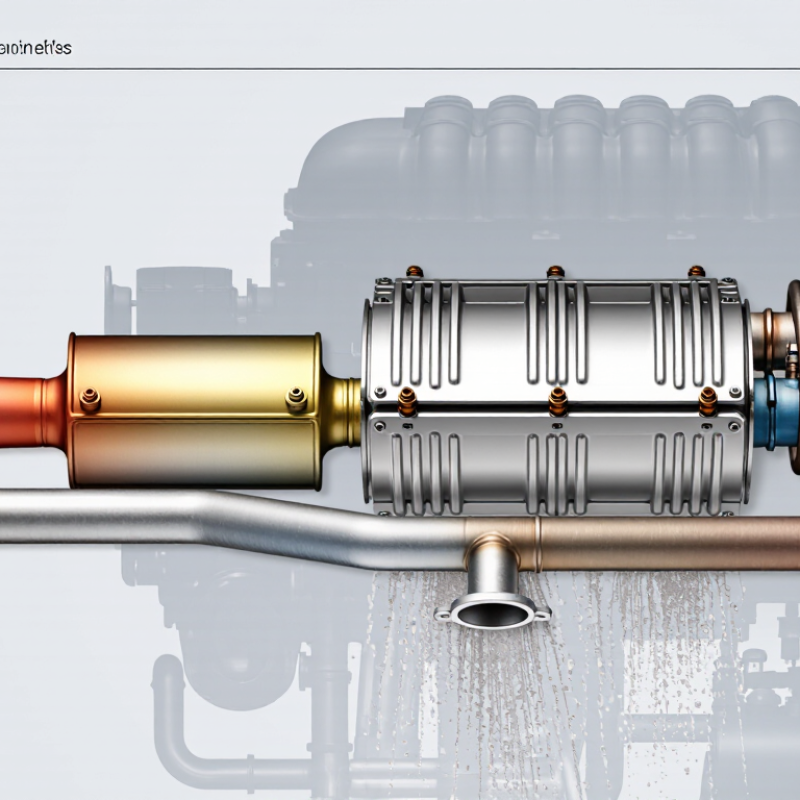
Exhaust heat begins in the combustion chambers, then leaves with hot gas through the exhaust ports and manifold. Under heavy engine load, gas temperatures can approach 900°C in some gasoline-engine applications, as reported in SAE technical literature. The manifold receives this heat first. Nearby metal warms through conduction, while hot gas carries energy downstream. It moves quickly.
The catalytic converter heats as exhaust flows through its internal passages. U.S. Environmental Protection Agency technical guidance places diesel oxidation catalyst light-off commonly around 200–300°C; the exact point depends on the unit and operating conditions. Farther along, pipes and mufflers absorb heat more gradually, though airflow and vehicle speed change the pattern. A parked vehicle may retain heat near the floor after the engine stops. That detail is easy to overlook.
Metal also expands. ASM International data for 304 stainless steel gives a thermal expansion coefficient near 17.3 micrometres per metre per degree Celsius over relevant temperature ranges. A half-metre section heated by 600°C could lengthen roughly 5 millimetres. Real exhaust assemblies use different alloys, joints, and temperatures, so this is an illustration, not a universal measurement. The neat diagram is never the whole story. A loose shield or worn hanger can alter how heat reaches nearby parts.
7 Best Facts on How Temperature Affects Exhaust Parts?
Thermal Expansion and Stress in Exhaust Pipes and Fasteners
Exhaust pipes grow as they heat, then contract as they cool. The movement is small, but repeated cycles can load bends, hangers, joints, and fasteners. The Nickel Institute’s Design Guidelines for the Selection and Use of Stainless Steels reports an average thermal expansion coefficient of about 17.8 × 10⁻⁶ per °C for type 304 stainless steel from 20°C to 300°C. At that rate, a one-metre section heated evenly through 300°C would lengthen about 5.3 millimetres. That is an estimate, not a fit-up specification. Real pipes see uneven temperatures, vibration, and changing support loads.
Tips: Leave room to move. Check for rubbing near brackets, body panels, and shields. Avoid forcing a hot pipe into alignment; that can leave stress trapped in the assembly.
Fasteners face a different problem. A joint’s bolt and clamped parts may heat and expand at different rates, shifting clamp load through repeated cycles. Corrosion and deposits can make inspection harder, too. A neat calculation cannot capture every vehicle’s heat pattern. That limitation matters. During service, look for polished contact marks, loosened joints, cracked welds, or uneven gaps. Record where the movement appears, rather than tightening everything by guesswork.
| # | Fact | Relevant Data | Effect on Exhaust Parts |
|---|---|---|---|
| 1 | Exhaust temperature varies considerably along the system. | Under high-load operation, exhaust gas near the engine can reach several hundred degrees Celsius and, in some conditions, approach roughly 800–900°C. Gas and component temperatures generally decrease farther downstream. | Different sections of a pipe, manifold, or muffler heat and cool at different rates, creating temperature gradients and uneven expansion. |
| 2 | Metal exhaust pipes expand as their temperature rises. | Austenitic stainless steel commonly has a linear thermal expansion coefficient of about 16–18 × 10−6/°C near room temperature; the exact value depends on the alloy and temperature. | For illustration, a 1 m stainless-steel pipe heated by 600°C would expand by approximately 10 mm, using a coefficient of 16.5 × 10⁻⁶/°C. |
| 3 | Different metals do not expand by the same amount. | Many carbon steels have a room-temperature expansion coefficient around 11–13 × 10−6/°C, while common austenitic stainless steels are typically around 16–18 × 10−6/°C. | When dissimilar materials are joined, their unequal movement can load welds, flanges, joints, and fasteners. Actual expansion also depends on temperature and material grade. |
| 4 | Restrained thermal expansion creates stress. | A pipe that can slide or flex can accommodate movement more readily than one fixed rigidly at multiple points. | Rigid supports or misaligned joints can turn expansion into axial or bending stress, increasing the risk of distortion, cracked welds, or joint leakage. |
| 5 | Temperature changes can alter fastener clamping force. | Bolts, nuts, and the clamped parts heat and cool at different rates and may experience different temperatures. | Differential expansion can change joint preload. Repeated heating and cooling, vibration, surface settling, and corrosion can also contribute to fastener loosening or reduced sealing force. |
| 6 | Repeated thermal cycles can cause fatigue over time. | Every warm-up and cool-down cycle makes exhaust components expand and contract. The number and severity of cycles depend on operating conditions and use. | Repeated strain can initiate or grow fatigue cracks, particularly near welds, bends, brackets, and other areas where geometry concentrates stress. |
| 7 | High temperature accelerates oxidation and can affect material strength. | Oxidation rates depend on temperature, alloy composition, oxygen exposure, and time; there is no single temperature threshold that applies to every exhaust material. | Heat-related oxidation and scaling can thin or weaken components over time. Material selection, wall thickness, joint design, and provision for thermal movement all influence service life. |
Note: Temperature and expansion figures are approximate examples, not specifications for every vehicle or exhaust system. Actual values vary with engine load, location, material grade, geometry, and operating conditions.
Every drive puts exhaust parts through a temperature swing. Metal expands as hot gases pass through, then contracts while the vehicle cools. One cycle is usually manageable. Repeated cycles build stress, especially around welds, bends, and mounting points where movement is restricted.
Small cracks can begin at these stressed areas. They may be difficult to spot when the pipe is cold, then open slightly as it heats. A faint ticking sound near a joint or dark soot marks can be clues, though neither proves a crack by itself. Uneven heating can also distort thin sections. A flange may no longer sit flat, leaving a gap that allows exhaust to escape.
Heat-related damage does not always happen quickly. Short trips can mean frequent heating and cooling, while long periods at high load can keep parts intensely hot. Both patterns matter. In practical inspections, look for warped edges, loose supports, and hairline cracks after the system has fully cooled. Never judge a hot exhaust by touch. Small details are easy to miss. I’d be cautious about blaming temperature alone: vibration, corrosion, and poor support can worsen fatigue, and sometimes the cause is not obvious.
A catalytic converter needs heat to clean exhaust, but it must warm up first. During cold starts, the catalyst works less effectively, while oxygen sensors take time to provide reliable feedback. The U.S. Environmental Protection Agency’s FTP-75 emissions test includes a cold-start phase for this reason. Cold weather also changes driving efficiency: the U.S. Department of Energy estimates conventional gasoline vehicles get about 15% lower fuel economy at 20°F than at 77°F, with short trips showing losses of up to 24%. That figure is not a direct emissions measurement, but it highlights how often cold operation can matter.
Excessive heat is different. Prolonged high temperatures can stress catalyst materials and sensor wiring; misfires or an overly rich fuel mixture may send unburned fuel into the converter and push temperatures higher. A glowing converter is a warning sign, not a normal temperature check. Still, temperature alone rarely explains a fault. A sensor reading can be misleading if wiring, exhaust leaks, or engine operation are also involved. Not a perfect proxy.
Tips: Note when a warning light appears, and compare cold-start behavior with fully warmed-up performance. Avoid replacing a sensor based on one reading; confirm the fault with diagnostic data and an inspection.
Temperature changes exhaust parts through repeated expansion, oxidation, and cooling. SAE International technical literature commonly places gasoline catalyst light-off around 250–300°C, though design and aging shift the exact point. Under load, exhaust components face much higher temperatures. The metal expands, then contracts after shutdown. ASM Handbook data gives 304 stainless steel a thermal expansion coefficient near 17.3 micrometers per meter per degree Celsius over 20–100°C. Even modest temperature swings can move joints and load welds. Small cracks can follow.
Corrosion often begins during cooling. Water vapor in exhaust condenses inside a cold muffler, carrying acidic combustion by-products. Road salt and trapped moisture can attack the outer shell and seams. Heat can speed oxidation, but frequent short trips may be harsher: parts may never get hot enough to dry fully. A damp muffler after a brief winter drive is a familiar warning. Not every rust patch means imminent failure.
Temperature also affects performance and lifespan. A cracked pipe can leak, alter sensor readings, and reduce exhaust flow control; a damaged catalyst may take longer to reach effective operation. Still, heat alone does not explain every failure. Material thickness, drainage, driving patterns, and installation stress matter too. I would inspect seams and hangers, not just the visible pipe. That detail is easy to miss.
These approximate ranges vary with engine type, load, and measurement location; they are not a temperature profile for one vehicle. Higher heat can accelerate oxidation and thermal fatigue, while cooling and condensation can encourage corrosion. Temperature alone cannot predict a part’s lifespan.
Metal expands as hot gases pass through and contracts as the vehicle cools. Repeated cycles can build stress near welds, bends, and mounting points. It adds up.
A faint ticking near a joint or dark soot marks may be clues. Look for hairline cracks, warped edges, and loose supports after the system cools. Neither clue proves a crack.
Short trips can involve frequent heating and cooling, which may add stress over time. Long, high-load drives can also keep parts very hot. The pattern matters.
No. Vibration, corrosion, and poor support can worsen fatigue. The cause is not always obvious, so blaming temperature alone may miss something.
A catalytic converter needs time to warm up, and oxygen sensors also need time to provide reliable feedback. Cold operation can matter.
Prolonged high temperatures can stress catalyst materials and sensor wiring. Misfires or a rich fuel mixture may send unburned fuel into the converter. A glowing converter is a warning sign.
Not necessarily. Wiring problems, exhaust leaks, or engine issues can affect readings. Confirm the fault with diagnostic data and an inspection. One reading can mislead.
Wait until the system has fully cooled. Check around joints and mounting points for soot, cracks, warped edges, or loose supports. Never touch it while hot.
How does temperature affect exhaust parts? Heat begins in the engine and travels through the exhaust system, with the hottest areas typically closest to the engine. As metal pipes and fasteners warm up, they expand; when they cool, they contract. Repeated changes in temperature place stress on joints and components, which can gradually lead to fatigue, warping, loose connections, or cracks.
Temperature also affects parts that manage emissions and monitor exhaust gases. Catalytic converters need to reach an effective operating temperature, while excessive heat may damage them or nearby sensors. Over time, heat can accelerate oxidation and corrosion, especially when combined with moisture and road exposure. These effects may reduce exhaust flow, affect engine performance, and shorten the lifespan of system components. Understanding how heat moves through the system helps explain why suitable materials, secure connections, and regular inspection matter.
GLX Auto Parts