The global industrial landscape for copper exhaust gaskets has witnessed a significant transformation in the last decade. As automotive engineering pushes the boundaries of heat management and pressure sealing, solid copper has emerged as the gold standard for high-performance applications. Unlike standard composite or multi-layer steel (MLS) gaskets, copper gaskets offer superior thermal conductivity and are essential in heavy-duty engines, turbocharged setups, and aerospace exhaust systems.
Copper transfers heat across the cylinder head and manifold surface more efficiently than any other commercial gasket material, preventing localized hot spots and warping.
Industrial procurement departments favor copper because these gaskets can often be annealed and reused, significantly lowering the Total Cost of Ownership (TCO) in testing environments.
In the world of forced induction (turbo/supercharging), copper provides the necessary malleability to seal microscopic surface imperfections under extreme PSI.
As a leading Copper Exhaust Gaskets Supplier, we observe that procurement strategies are shifting from "lowest cost" to "best performance value." Global enterprises in Europe and North America are increasingly looking for suppliers who can integrate AI-driven manufacturing precision with traditional metallurgical expertise.

Copper exhaust gaskets aren't just for race cars. Their application spans across diverse localized sectors, each with unique requirements:
NHRA and Formula drift teams use copper to handle exhaust gas temperatures (EGT) exceeding 1600°F without "blowing out" the gasket.
Mining and agricultural equipment in harsh climates rely on the durability of copper to reduce downtime during critical harvest or extraction seasons.
The corrosion resistance of high-grade copper makes it ideal for wet-exhaust systems in saltwater environments where steel gaskets would fail prematurely.

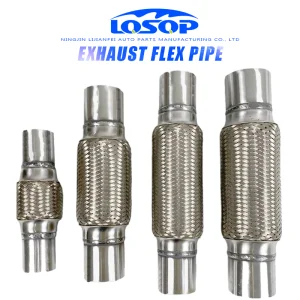
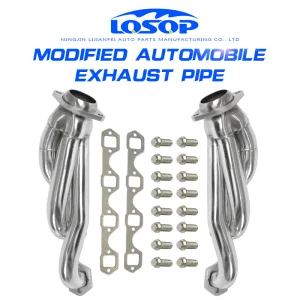
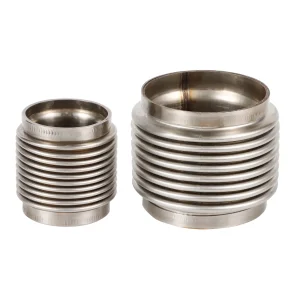
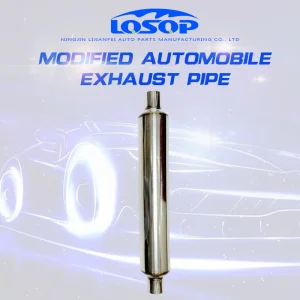
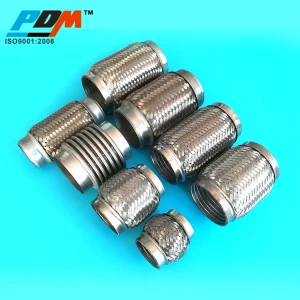
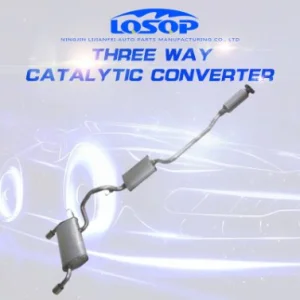
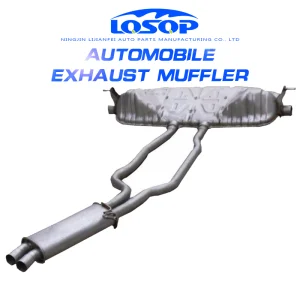
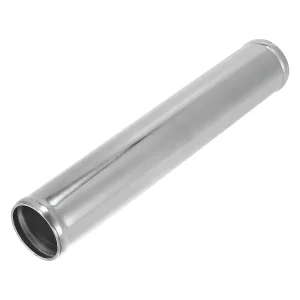
Guangzhou GLX Auto Parts Co., Ltd. is a highly professional and experienced supplier in the research, development and production of various automotive fittings, exhaust systems and Performance parts in China. We manufacture and supply a wide range of stylish accessories of Automobile Refit to customers across the world. Our products mainly include mufflers, Muffler tips, Flexible pipes, Pipes & tubing, Catalytic Converters.
Our products enjoy much popularity among Euro, South America, Australia markets and win credits from many clients. We leverage China's advanced manufacturing infrastructure to provide Copper Exhaust Gaskets that rival any Top 10 global supplier in quality while maintaining competitive factory pricing.
If customer can guarantee steady order quantity every month, we will develop them as our agent and protect their market.
Our company are professional automotive parts manufacturer. We are ALIBABA Trade Assurance Supplier also. So you can trust us very well.
We keep good quality and competitive price to ensure our customers benefit; we respect every customer as our friend and we sincerely do business.
Package all use environment and good quality seven double corrugated cartons fumigation-free wooden pallet maintaining your products.
Our quality are 100% quality assurance. If any quality problem under manufacturing, we will free replace for you in next order.
GLX is noted for top-notch, responsive, 24/7/365 service – all emails and voicemails are replied within six hours, guaranteed.
When searching for a "Top 10 Copper Exhaust Gasket Supplier," it is crucial to understand the metallurgy. Solid copper gaskets (usually C11000 grade) feature a "crush" zone that allows the gasket to flow into the surface irregularities of the manifold and head. This creates a mechanical bond that is far superior to standard gaskets.
At GLX, we utilize AI-monitored heat treatment ovens to ensure every batch of gaskets reaches the optimal hardness (Rockwell scale). This precision ensures that when you install our gaskets in a high-performance Toyota Corolla, a Ford Mustang, or a custom Chevrolet build, the seal remains airtight even under thermal expansion cycles.
 GLX Auto Parts