Engineered for high durability, optimal pressure drop management, and seamless diagnostic sensor integration.
How the interplay between structural exhaust design and digital sensing technology dictates the efficiency of modern emission control systems.
In the modern automotive engineering landscape, the exhaust pressure sensor (EPS)—especially the differential exhaust pressure sensor—serves as the primary nerve ending of the vehicle's engine control unit (ECU). Its primary responsibility is measuring the pressure differential across the Diesel Particulate Filter (DPF) or monitoring the backpressure upstream of the turbocharger to optimize combustion efficiency. As global vehicle emission regulations tighten (e.g., Euro VI, EPA 10/13, China VI, and upcoming Euro VII), the mechanical environment surrounding these sensors must achieve zero-defect integrity.
Without precise, pressure-resistant manifolds, flexible expansion bellows, and stable tubing channels, sensor readouts become skewed by micro-leaks, high thermal stress, and engine vibrations. This structural-sensor synergy is where advanced Chinese engineering has stepped up to bridge the gap. By designing high-specification hardware such as the ASTM A790 Duplex 2205 Exhaust Tubing and premium bellows kits, manufacturers ensure that the gas flow remains linear and clean, providing the perfect physical environment for sensors to record precise data points without thermal noise or transient pressure drops.
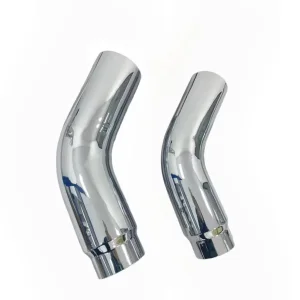
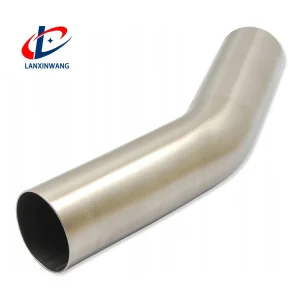
Exhaust pressure sensors monitor particulate buildup. By implementing high-grade custom mandrel bends, turbulence is minimized, resulting in a predictable backpressure curve for easier ECU diagnostic sweeps.
Differential pressure readings before and after the Exhaust Gas Recirculation (EGR) valve allow real-time flow rate adjustment, reducing NOx generation in commercial vehicles.
Using titanium-stabilized and molybdenum-alloyed stainless steels (such as 304 and Duplex 2205) prevents particulate contamination from scaling internal sensor tubes, protecting sensor diaphragms from failure.
Understanding procurement requirements for heavy-duty fleet manufacturers, automotive Tier-1 suppliers, and aftermarket distributors.
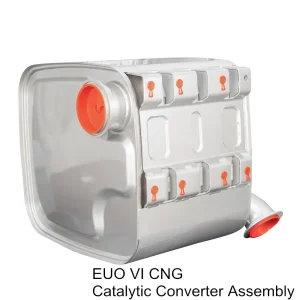
Purchasing agents and procurement engineers in the global automotive sector face major headwinds regarding system-wide integration. When buying aftertreatment assemblies—including high-quality direct-fit Euro VI boxes (DOC+DPF) or custom turbocharger pipe kits—the mechanical alignment of the sensor port is a critical failure point. A mismatch in thread class, a misaligned tap angle, or insufficient weld penetration can lead to exhaust gas bypass, instantly throwing OBD codes and causing premature sensor degradation due to concentrated soot exposure.
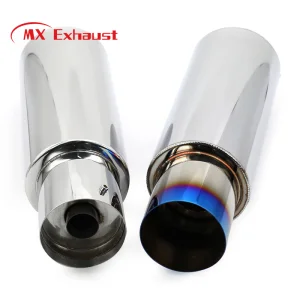
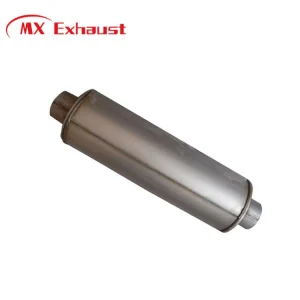
Therefore, global OEMs are moving away from piecemeal sourcing. Instead of buying exhaust tubing from one source, sensor ports from another, and catalytic converters from a third, the preferred procurement pipeline now mandates sub-assembly integration. Factories like Guangzhou GLX Auto Parts Co., Ltd. offer a comprehensive scope of supply—delivering mandrel-bent tubing, high-integrity bellows, custom flanges, and sound-attenuation mufflers directly to the integration lines, minimizing structural alignment deviations and ensuring that final pressure sensors calibrate perfectly with the physical exhaust dynamics.
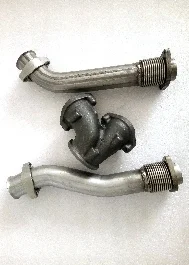
In diesel systems operating at temperatures exceeding 650°C, thermal expansion rates differ between structural tubing and sensor probe enclosures. High-performance stainless steel up-pipe kits containing multi-ply bellows act as thermal-expansion expansion links, isolating the sensor mounting bosses from stresses that could cause sensor fatigue or shear failures.
Your Strategic Manufacturing Partner for Advanced Exhaust Assemblies & Systems
Guangzhou GLX Auto Parts Co., Ltd. is a highly professional and experienced supplier in the research, development, and production of various automotive fittings, exhaust systems, and performance parts in China. We manufacture and supply a wide range of stylish accessories of Automobile Refit to customers across the world. Our products mainly include mufflers, muffler tips, flexible pipes, pipes & tubing, and catalytic converters.
Our products enjoy much popularity among Euro, South America, and Australia markets, winning credits and long-term trust from many clients by providing custom tooling, high-precision weldments, and corrosion-resistant alloys built to handle harsh engine room and underbody environments.


Our commitment to quality, engineering support, and localization benefits.
GLX automotive actively seeks partners worldwide for mutual development of exclusive territories for localized sales, distribution, and service. We are looking forward to your inquiry regarding potential cooperation and strategic sourcing programs.
If customers guarantee steady order quantities monthly, we develop them as exclusive territory agents, offering full market protection and priority engineering services.
As a verified Alibaba Trade Assurance Supplier and highly professional parts manufacturer, we back all transactions with verified safety protocols and manufacturing oversight.
We balance rigid quality control with competitive pricing to maximize buyer margin, treating every buyer as a long-term partner and friend, regardless of destination.
We pack using eco-friendly, premium-grade double corrugated boxes and fumigation-free wooden pallets to protect precision threads and polished finishes.
100% quality assurance. If any manufacturing defect slips through our quality control gates, we provide free replacement products in the next order sequence.
We are known for top-notch, responsive support. We guarantee detailed answers to all technical drawings and emails within 6 business hours.
The path forward: integrating smart exhaust pressure measurement, hydrogen exhaust challenges, and ultra-high-temperature alloy matching.
As the automotive sector enters the transition zone between high-efficiency internal combustion engines (ICE) and hybrid/fuel cell powertrains, exhaust hardware demands are changing. In hybrid engines, exhaust temperature cycles are more violent due to intermittent engine operation. This subjects exhaust piping and sensing lines to condensation and acid attack. Our developmental focus is shifting toward corrosion resistance materials, such as ASTM A790 Duplex 2205 and AISI 316L alloys, which prevent internal oxide scaling that can block the capillary tubes feeding pressure sensors.
Additionally, for hydrogen-powered ICEs, the exhaust gas composition is predominantly water vapor. This introduces severe risks of hydrogen embrittlement in the exhaust piping and pressure sensing manifolds. Our engineering laboratory is testing specialized barrier coatings and stress-annealing methods to ensure that pipes, bellows, and structural components maintain a hermetic seal over 1.5 million kilometers of heavy-duty operation, ensuring that pressure and flow sensors always operate within calibrated envelopes.
Answering crucial technical questions from engineering buyers and fleet maintenance operators worldwide.
A: A leak in the bellows creates an artificial pressure drop before the exhaust gases reach the DPF or SCR chamber. The differential pressure sensor reads a lower delta-P than actual, preventing the ECU from initiating active DPF regeneration cycles. This causes fast DPF clogging. Using dual-ply, interlock bellows kits (such as our SUS304 assemblies) prevents micro-cracking and maintains sensor calibration.
A: Duplex 2205 provides double the mechanical strength of standard austenitic stainless steels (like 304 or 316) along with superior resistance to pitting and crevice corrosion in chloride and acidic exhaust condensates. This prevents sensor tube blockage or thinning, guaranteeing sensor accuracy and preventing exhaust gas bypass leaks over high mileages.
A: Yes. Mandrel bending maintains a uniform inner diameter without wrinkles or constriction points. Wrinkles create local turbulence and pressure waves, which generate diagnostic signal noise. Smooth mandrel-bent tubes ensure laminar gas flow, yielding clean sensor readings and optimal engine mapping.
A: We use seven-ply double corrugated cartons and protect products with high-density foam or individual wrapping. Heavy assemblies are packed on fumigation-free wooden pallets, preventing structural distortion, flange bending, or thread damage during ocean shipping.
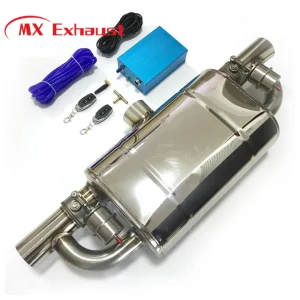
Complete your exhaust line with high-performance catalysts, valved mufflers, and mounting hardware.
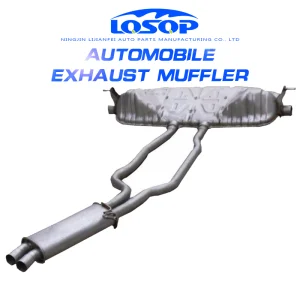
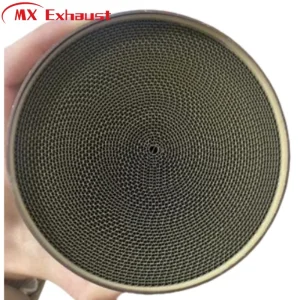
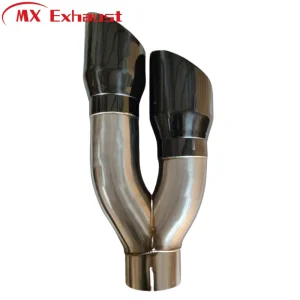
 GLX Auto Parts