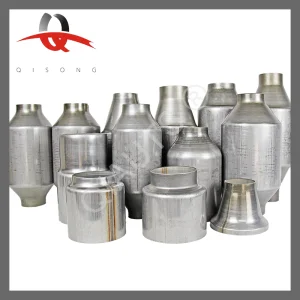
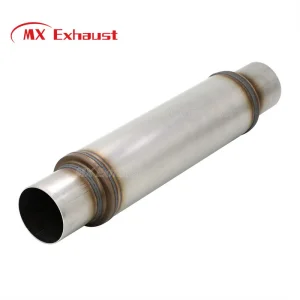
Explore our advanced engineered components designed for noise reduction, emissions control, and flow efficiency.
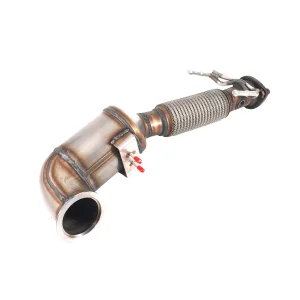
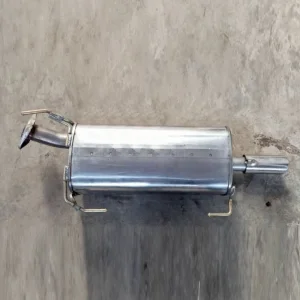
In high-performance automotive and heavy industrial applications, exhaust sound dampeners—more commonly referred to as exhaust silencers or mufflers—must achieve a delicate, dual-objective engineering feat: minimizing acoustic noise emissions to comply with local legislations while keeping system backpressure to an absolute minimum to preserve engine output efficiency. The science of modern sound attenuation has shifted from simple mechanical baffles to complex wave-cancellation physics, thermodynamics, and advanced materials engineering.
Industrial exhaust sound dampeners generally employ two primary methods of noise control. Dissipative silencers utilize sound-absorbing material inside the casing, such as fiberglass, basalt wool, or continuous-filament glass fibers. When high-frequency sound waves travel through the perforated steel tubing of the exhaust system, they penetrate the packing material. The acoustic energy causes the fibers to vibrate, converting acoustic energy into thermal energy. This is highly effective for high-frequency noise typical in high-RPM performance engines.
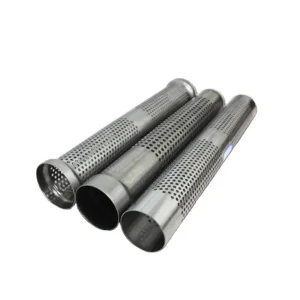
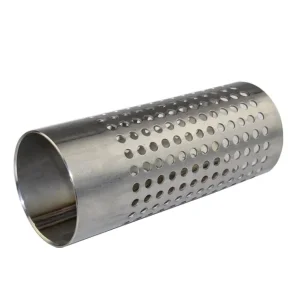
Conversely, reflective silencers utilize expansion chambers, baffles, and tuned Helmholtz resonators. These chambers force sound waves to reflect back upon themselves, creating destructive interference that cancels out specific low-to-mid frequency resonance patterns. Precision manufacturing of perforated tubes using Grade 304 or 409L stainless steel is critical here. The geometry of the perforations—specifically, the hole diameter, pitch, and open area percentage—directly defines the target frequency range that the dampener will address.
| Material Grade | Thermal Threshold | Corrosion Resistance | Common Applications |
|---|---|---|---|
| T304 Stainless Steel | Up to 870°C | Excellent (High Chromium & Nickel) | Premium Exhaust Tips, Mufflers, Perforated Tubes, Racing Applications |
| T409L Stainless Steel | Up to 815°C | Moderate (Excellent for dry heat and cycling) | Underbody Tubing, Catalytic Converter Shells, OEM Muffler Bodies |
| SS316 Stainless Steel | Up to 920°C | Superior (Includes Molybdenum for saline/acidic exposure) | Heavy-Duty Marine Exhaust, Off-shore generators, Acidic Gas Silencers |
| Aluminized Steel | Up to 650°C | Standard (Budget protection against oxidation) | Low-Cost Aftermarket Replacements, Light Duty Forestry/Agricultural Tools |
The global automotive supply chain demands rapid prototyping, strict quality assurance, and high volume scalability. As a leading hub for automotive exhaust components, Chinese factories have upgraded from manual fabrication facilities into fully integrated Factory 4.0 smart plants. Utilizing automated robotic welding systems (TIG/MIG), CNC multi-axis pipe bending equipment, and computer-controlled high-speed perforation machines, manufacturers like Guangzhou GLX Auto Parts Co., Ltd. ensure every product meets tolerances within fractions of a millimeter.
One of the primary competitive advantages of sourcing exhaust sound dampeners from tier-one Chinese manufacturers is vertical supply chain integration. The direct access to domestic premium stainless steel foundries eliminates international raw material delay risks. By manufacturing core sub-components—such as perforated tubing, stamped end caps, and inner baffle plates—in-house, factories drastically lower operational waste and pass these cost efficiencies directly onto global distributors.
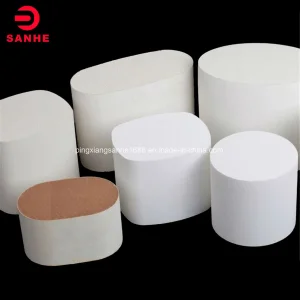
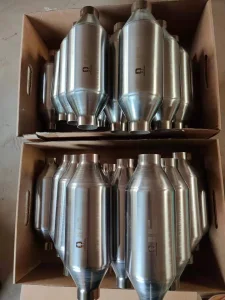
Heavy steel components and fragile ceramic cores (such as those in catalytic converters) are highly susceptible to transit damage during maritime shipping. Industry-leading Chinese manufacturers solve this via specialized packing protocols. Employing high-grade, double-wall corrugated shipping boxes and fumigation-free wooden pallets secures structural integrity. This ensures that whether components travel to Europe, South America, or Australia, they arrive free of mechanical deformation or micro-fractures in the internal ceramic structures.
Guangzhou GLX Auto Parts Co., Ltd. is a highly professional and experienced supplier in the research, development and production of various automotive fittings, exhaust systems and Performance parts in China. We manufacture and supply a wide range of stylish accessories of Automobile Refit to customers across the world. Our products mainly include mufflers, Muffler tips, Flexible pipes, Pipes & tubing, Catalytic Converters.
Our products enjoy much popularity among Euro, South America, Australia markets and win credits from many clients.
Read More

GLX automotive actively seeks partners worldwide for mutual development of exclusive territories for localized sales, distribution and service, and we are looking forward to your inquiry regarding potential cooperation. We focus on long-term industrial partnerships that provide stable volume pricing and dedicated regional market protection.
If customer can guarantee steady order quantity every month, we will develop them as our agent and protect their localized market.
Our company is a professional automotive parts manufacturer. We are an ALIBABA Trade Assurance Supplier, offering guaranteed purchase protection.
We maintain premium quality and competitive pricing. We treat every customer as our friend and build reliable long-term business partnerships globally.
We pack all products in environmentally friendly, premium double corrugated cartons with fumigation-free wooden pallets to protect structural integrity.
Backed by our 100% quality assurance. If any manufacturing defect is encountered, we provide a free replacement in your subsequent order.
Noted for top-notch, responsive, 24/7/365 customer support. All emails, RFQs, and inquiries are answered within 6 hours, guaranteed.
Exhaust system requirements vary dramatically by territory, engine architecture, and environmental conditions. Sourcing agents must identify the exact localized application needs to ensure long-term durability and performance compliance.
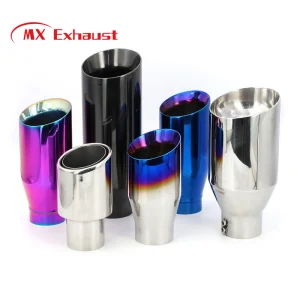
In mature automotive markets like Germany, Japan, and the United States, aftermarket tuning is a multi-billion dollar sector. In these environments, sound dampeners must suppress high-frequency drone during highway cruising but deliver a deep, resonant tone under acceleration. Sourcing dual-wall stainless steel exhaust tips and electronic valve mufflers gives end-users the ability to alternate between quiet street modes and high-flow track modes instantly.
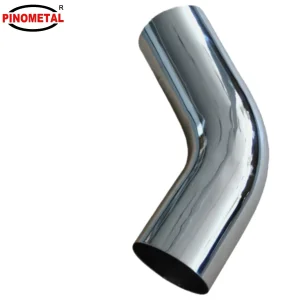
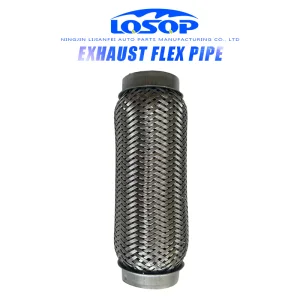
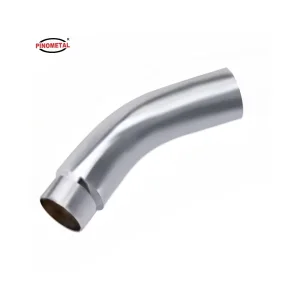
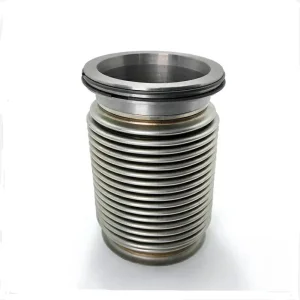
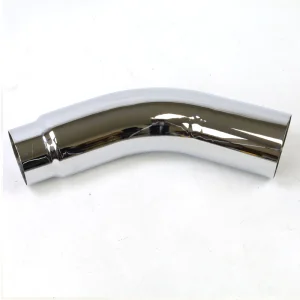
Long-haul trucks, such as those built on Scania or Peterbilt chassis, require exhaust components that can survive harsh environmental stresses. Heavy-duty exhaust elbows (such as 5-inch 58-degree bends) and flexible corrugated connectors must withstand continuous engine vibrations and exhaust temperatures exceeding 750°C. Sourcing components made of heavy-gauge aluminized steel or T409L stainless steel is crucial for limiting premature fatigue cracks and system downtime.
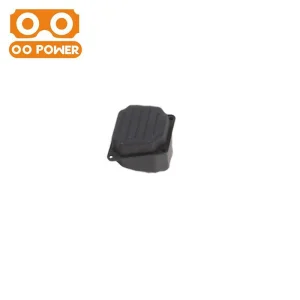
Small-engine applications, including high-power chainsaws (such as the Stl 180 chainsaw muffler) and industrial generators, require compact, highly robust sound dampeners. In these applications, the silencer must include spark-arresting mesh to prevent fires in agricultural or forestry settings. This requires precision-formed stampings and high-durability internal baffles capable of handling pulsating pressures directly from the engine cylinder head.
Get professional insights on material selection, compliance, and custom fabrication for exhaust system components.
Reliable components designed for high-stress heavy vehicles, industrial machinery, and performance configurations.
 GLX Auto Parts