The global automotive and industrial mobility sectors are undergoing a monumental paradigm shift. As environmental regulations such as Euro 6d/7, EPA Tier 4 Final, and China VI-b reach stringent enforcement levels, the engineering complexity of exhaust systems has escalated dramatically. Modern exhaust system design is no longer merely about routing toxic gas away from vehicle occupants; it is a highly sophisticated discipline combining fluid dynamics, advanced metallurgy, thermodynamic management, and acoustic resonance tuning.
China has established itself as the undisputed manufacturing backbone of global automotive supply chains. Today, leading Chinese manufacturers combine deep raw material integration (high-grade SS304, SS409L, SS316, and titanium alloys) with fully automated CNC mandrel bending, robotic TIG/MIG welding, laser hydroforming, and precision washcoating facilities.
This comprehensive engineering guide examines how top-tier OEMs and aftermarket enterprise buyers can leverage China's advanced manufacturing matrix. By understanding key design principles—such as backpressure optimization via Computational Fluid Dynamics (CFD), substrate thermal shock resistance, and sound wave cancellation technology—procurement executives can make data-driven decisions that ensure regulatory compliance, enhance operational durability, and reduce Total Cost of Ownership (TCO).
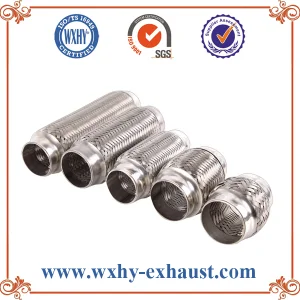
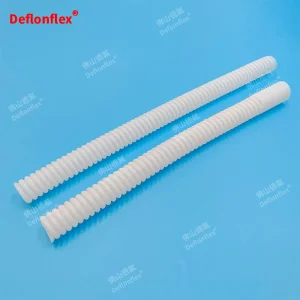
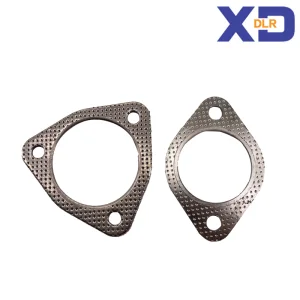
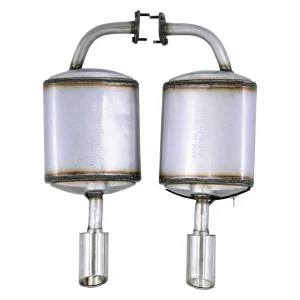
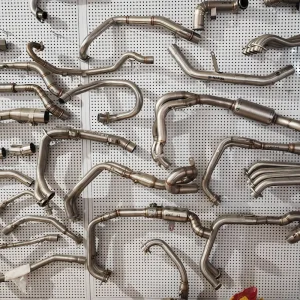
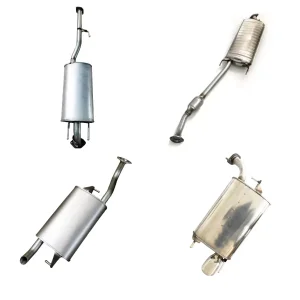
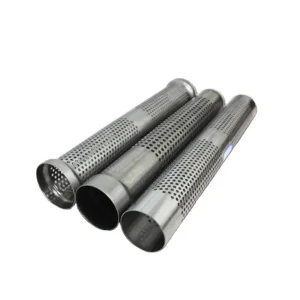
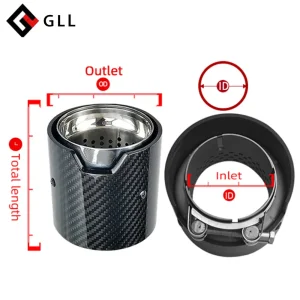
Guangzhou GLX Auto Parts Co., Ltd. is a highly professional and experienced supplier in the research, development and production of various automotive fittings, exhaust systems and Performance parts in China. We manufacture and supply a wide range of stylish accessories of Automobile Refit to customers across the world. Our products mainly include mufflers, Muffler tips, Flexible pipes, Pipes & tubing, Catalytic Converters.
Our products enjoy much popularity among Euro, South America, Australia markets and win credits from many clients. By implementing strict quality controls and staying committed to engineering precision, GLX bridges the gap between affordable volume manufacturing and high-end automotive performance.

Modern exhaust system design requires balancing backpressure reduction, acoustic damping, thermal isolation, and precious metal catalytic converter efficiency.
Engineers utilize 3D CFD simulation tools to analyze exhaust gas velocities, pressure drops, and turbulence patterns inside manifolds and collector pipes. By optimizing runner lengths, collector angles, and internal acoustic expansion chambers, backpressure is minimized by up to 35%. Lower backpressure directly translates to reduced pumping losses, improved volumetric efficiency, lower cylinder temperatures, and enhanced fuel economy across both gasoline and diesel engines.
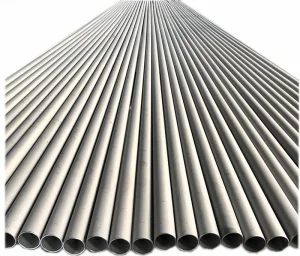
Material selection defines the operational lifespan and thermal stress tolerance of an exhaust system.
| Material Grade | Chromium / Nickel Content | Max Thermal Resistance | Corrosion Resistance | Primary Application Domain |
|---|---|---|---|---|
| SS409L (Ferritic) | 10.5% - 11.7% Cr / 0.5% Ni | 650°C - 700°C | Moderate (Surface Oxidation) | OEM Underbody Tubing, OE Catalytic Casing |
| SS304 (Austenitic) | 18.0% - 20.0% Cr / 8.0% - 10.5% Ni | 870°C - 920°C | High (Salt Spray Certified) | Performance Mufflers, Tips, Manifold Headers |
| SS316 (Austenitic + Mo) | 16.0% - 18.0% Cr / 10.0% - 14.0% Ni (2% Mo) | 920°C - 980°C | Extreme (Marine & Chemical Environments) | High-Corrosion Heavy Fleet & Marine Exhausts |
| Titanium Grade 2 / 5 | Titanium Alloy Matrix | 800°C+ (Ultra-Lightweight) | Maximum Resistance | Supercars, High-End Powersports, Racing Systems |
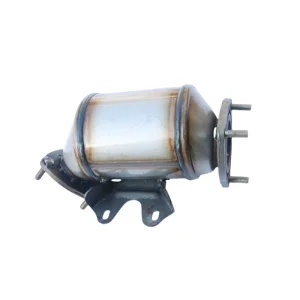
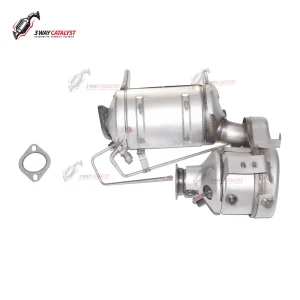
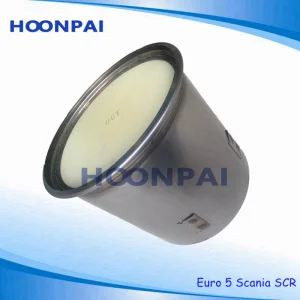
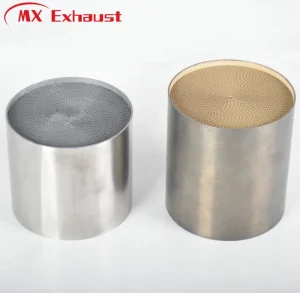
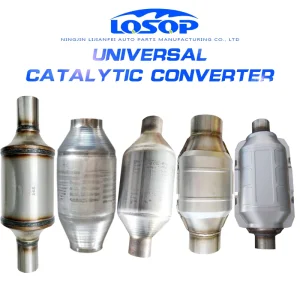
With Euro 5, Euro 6, and EPA requirements demanding multi-phase emissions conversion, modern exhaust catalytic converters utilize high-cell-density honeycomb substrates. Ceramic cores (400-600 CPSI) and metallic foil substrates (100-300 CPSI) are coated with precious metals—Platinum (Pt), Palladium (Pd), and Rhodium (Rh). These washcoats rapidly convert carbon monoxide (CO), unburnt hydrocarbons (HC), and nitrogen oxides (NOx) into harmless N2, CO2, and water vapor. Dual-core DPF and SCR technology integrated into diesel exhaust manifolds guarantee compliance for heavy machinery and commercial vehicles.
GLX automotive actively seeks partners worldwide for mutual development of exclusive territories for localized sales, distribution and service, and we are looking forward to your inquiry regarding potential cooperation.

If customer can guarantee steady order quantity every month, we will develop them as our exclusive agent and fully protect their local market rights.
Our company is a professional automotive parts manufacturer. We are an ALIBABA Trade Assurance Supplier, ensuring 100% security for your capital and orders.
We maintain top quality and competitive pricing to ensure customer benefit; we respect every client as a friend and sincerely conduct business, no matter where they come from.
All products use eco-friendly, heavy-duty seven-layer double corrugated cartons and fumigation-free wooden pallets, ensuring complete protection during international transport.
Our quality features 100% quality assurance guarantee. If any manufacturing quality defect arises under normal operation, we provide free replacement in your next order.
GLX is noted for top-notch, responsive, 24/7/365 service – all client emails and inquiries are guaranteed a detailed technical response within six hours.
Whether you are an OEM vehicle manufacturer, direct aftermarket distributor, or industrial power system integrator, custom exhaust solutions are essential for meeting localized commercial and regulatory requirements.
For high-volume vehicles like Toyota Camry, Corolla, RAV4, Hilux, and Nissan Teana, replacement mufflers and catalytic converters require exact 1:1 bolt-on fitment. GLX uses 3D laser scanning of OEM original chassis units to fabricate direct-fit manifolds, flexible joint assemblies, and rear mufflers. This eliminates installation modification costs for repair shops and fleet operators worldwide.
Commercial fleets operating heavy-duty diesel trucks (such as Scania, JAC Refine M4, and Volvo heavy transport) face extreme thermal cycles and heavy particulate buildup. Our dual-core ceramic honeycomb DPF filters and Selective Catalytic Reduction (SCR) catalysts effectively remove soot particulates and reduce NOx emissions by up to 98%, meeting Euro 5 and Euro 6 emissions targets without compromising engine output horsepower.
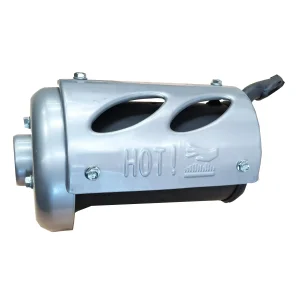
Generator sets operating near residential areas or construction sites demand strict sound suppression without causing thermal buildup. GLX designs specialized multi-stage reflective and reactive mufflers compatible with gasoline and diesel portable generators, achieving a noise reduction of 25 dB(A) to 35 dB(A).
As automotive technology evolves toward hybrid powertrain architectures, hydrogen internal combustion, and lightweight performance, exhaust systems are incorporating smart digital technologies.
Integration of electronically controlled dynamic exhaust valves linked to CAN-bus engine telemetry to dynamically switch between low-decibel acoustic profiles and high-flow sports performance.
Widespread adoption of multi-layered GPF washcoat substrates for direct-injection turbocharged petrol engines, capturing ultra-fine particulates without increasing backpressure.
Specialized moisture-resistant SS316L exhaust manifolds engineered to handle high-water-vapor exhaust streams from hydrogen internal combustion engines (H2-ICE).
Implementation of carbon fiber, ceramic matrix thermal blankets, and hydroformed titanium tubing to reduce total exhaust weight by up to 45% compared to conventional assemblies.
Detailed technical answers to common questions regarding exhaust engineering, procurement, compliance, and material selection.
 GLX Auto Parts