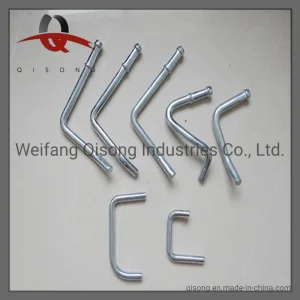
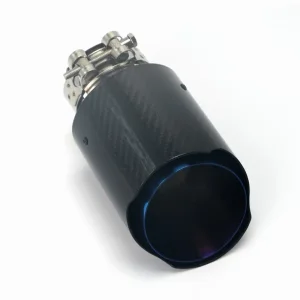
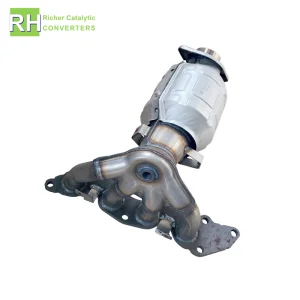
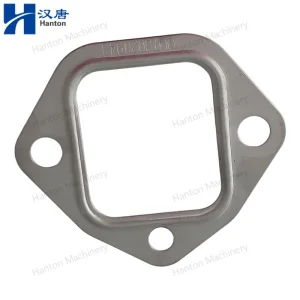
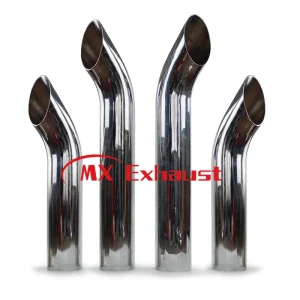
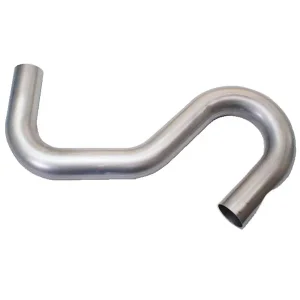
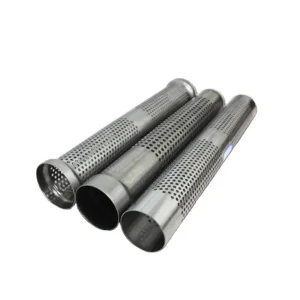
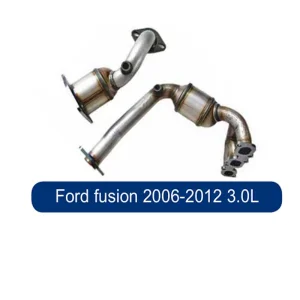
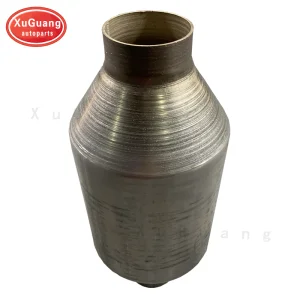
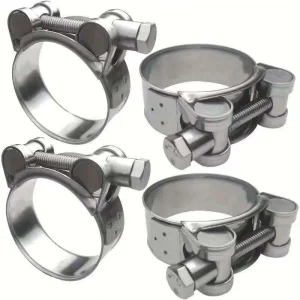
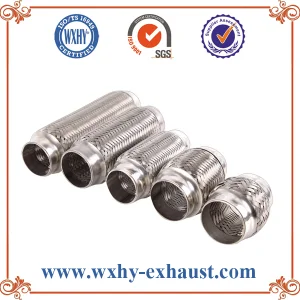
Explore our CE-certified line of robust exhaust joints, manifolds, hangers, and high-performance mufflers engineered to survive harsh operating conditions.
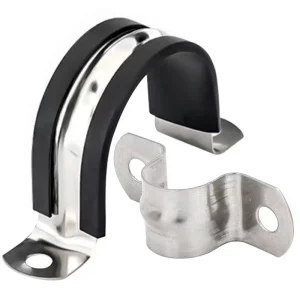
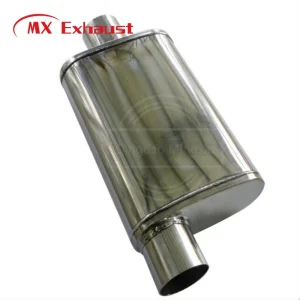
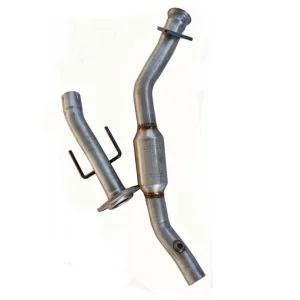
Within any high-temperature combustion exhaust network, the welded exhaust joint functions as the critical junction managing thermodynamic expansion, intense mechanical vibrations, and high-velocity gas flows. A failure in joint integrity leads directly to leakage, lost exhaust backpressure control, emissions violations, and engine performance degradation.
Engineers face a complex optimization task when choosing and fabricating these joints. High-performance manifolds operate under thermal cycles that swing rapidly from sub-zero ambient temperatures to over 850°C. These intense fluctuations cause localized stress concentrations where the rigid exhaust pipe interfaces with bellows or mufflers. This demands superior metallurgical profiles and specialized welding methodologies such as tungsten inert gas (TIG) and laser welding to eliminate porosity and stress concentrations.
By securing CE Certification, our products demonstrate compliance with European health, safety, and environmental protection standards, ensuring that our joints are engineered, inspected, and verified under stringent mechanical testing criteria, including thermal shock cycles and helium-based leak detection.

Undergoing rigorous metallurgical and physical stress testing to guarantee long-term system reliability.
As powertrain technology evolves, exhaust joint systems must adapt to extreme conditions, alternative fuels, and advanced lightweight materials.
Hydrogen Internal Combustion Engines (H2-ICE) are key to the carbon-neutral transport transition. However, H2 combustion generates high levels of water vapor. This introduces severe risk of acidic moisture accumulation inside the exhaust assembly. The future roadmap focuses on utilizing Super-Austenitic SS316L and molybdenum-alloyed stainless steels to prevent localized pitting and intergranular corrosion.
Hybrid powertrains experience frequent engine startup and shutdown sequences, inducing thermal shock cycles. Additionally, structural weight reduction demands thinner-walled pipes (down to 1.0mm or 0.8mm) without sacrificing mechanical strength. Advanced laser-beam welding (LBW) enables narrow, deep penetration welds that minimize the Heat Affected Zone (HAZ), mitigating structural weak points.
Next-generation flexible welded joints combine double-ply bellows with custom inner-braid or interlock structures. This composite profile absorbs high axial, angular, and lateral movements while providing optimal acoustic isolation. The result is minimized cabin noise and vibration harshness (NVH) alongside maximum engine efficiency.
Providing reliable and high-integrity solutions across the global transport and industrial sectors.
Modern passenger vehicle assembly lines demand exceptional dimensional stability. Our automated fabrication systems output exhaust joints with tolerances tight enough for robotic installation. This streamlines vehicle assembly, minimizes rework, and keeps production pipelines moving efficiently.
Class 8 trucks, construction machinery, and long-haul buses operate under heavy thermal and physical stress. Integrating heavy-duty clamps and robust welded connections prevents exhaust gas leaks upstream of DPF and SCR systems, ensuring compliance with strict environmental regulations.
Engine tuners demand high-flow catalytic converters, larger-diameter mandrel-bent pipes, and free-flowing mufflers. Our catalog provides fabricators with durable, heat-resistant components that withstand the aggressive pressure cycles of modified engines.

Operating out of Guangzhou, China's premier industrial hub, Guangzhou GLX Auto Parts Co., Ltd. combines geographical convenience with advanced Factory 4.0 manufacturing processes. We manage raw materials, fabrication, and quality control through integrated digital systems to ensure stable lead times and consistent product quality.
Our facility features precision robotic welding cells, CNC mandrel pipe bending equipment, and automated leak-testing systems. By streamlining our operations, we mitigate typical supply chain challenges like raw material price spikes and shipping delays, offering global buyers a dependable manufacturing partner.
Additionally, we utilize export-optimized packaging—including durable, double-corrugated cartons and fumigation-free pallets—to safeguard every shipment from humidity and transit wear, ensuring products arrive in ready-to-install condition.
Guangzhou GLX Auto Parts Co., Ltd. is a highly professional and experienced supplier in the research, development and production of various automotive fittings, exhaust systems and Performance parts in China. We manufacture and supply a wide range of stylish accessories of Automobile Refit to customers across the world. Our products mainly include mufflers, Muffler tips, Flexible pipes, Pipes & tubing, Catalytic Converters.
Our products enjoy much popularity among Euro, South America, Australia markets and win credits from many clients.
Dedicated to serving international distributors, automotive platforms, and commercial transport networks with professional engineering and reliable support.
If customer can guarantee steady order quantity every month, we will develop them as our agent and protect their market.
Our company are professional automotive parts manufacturer. We are ALIBABA Trade Assurance Supplier also. So you can trust us very well.
We keep good quality and competitive price to ensure our customers benefit; we respect every customer as our friend and we sincerely do business and make friends with them, no matter where they come from.
Package all use environment and good quality seven double corrugated cartons fumigation-free wooden pallet maintaining your products.
Our quality are 100% quality assurance. If any quality problem under manufacturing, we will free replace for you in next order.
GLX is noted for top-notch, responsive, 24/7/365 service – all emails and voicemails are replied within six hours, guaranteed.
How we address localized regulatory standards, customs procedures, and engineering requirements for international procurement teams.
Our production processes align with the Machinery Directive and Pressure Equipment Directive (PED). Every batch of welded joints undergoes non-destructive testing (NDT), microstructural analysis, and pressure-integrity validation to verify structural safety and quality.
We work directly with automotive engineering teams using standard CAD/CAM step files. Our engineers assist in modeling and optimizing custom configurations for complex physical layouts, high-vibration engine bays, or specialized exhaust routing.
We handle international compliance documentation, certificates of origin, and custom declarations. This ensures smooth customs processing for shipments to major distribution ports across Europe, the Americas, and Australia.
Answers to common engineering, quality assurance, and global supply chain questions.
Stainless steel SS304 and SS316 offer excellent oxidation and corrosion resistance, making them ideal for high-temperature zones. SS409L is a cost-effective, ferritic option commonly utilized in OEM exhaust systems for its lower thermal expansion coefficient and reliable dry-corrosion protection.
CE Certification ensures the joints meet European safety, structural, and environmental standards. It certifies that the welding processes, raw materials, and pressure retention capacities conform to standard specifications, ensuring safety under extreme thermal loads.
Our flexible exhaust joints utilize double or triple-ply stainless steel bellows reinforced with internal braiding or interlocking liners. This design decouples engine-induced vibration from the chassis and absorbs thermal expansion, preventing premature failure of downstream exhaust components.
We perform multi-stage testing including helium mass spectrometry for micro-leakage detection, hydrostatic testing for pressure limits, and dye penetrant testing to verify weld bead integrity. Additionally, we run thermal cycles to simulate years of operational wear.
Clients provide their mechanical drawings or specifications (such as diameter, length, and movement parameters). Our engineering team then models the joint, selects appropriate materials, and runs simulations to ensure performance before creating prototypes.
Standard orders typically complete production within 30 to 45 days. By using ocean freight channels from Guangzhou, we optimize shipping times to major global markets in Europe, the Americas, and Oceania.
Explore our technical components, including universal catalytic converters, mandrel bend charge pipes, and flexible tubes built for durability.
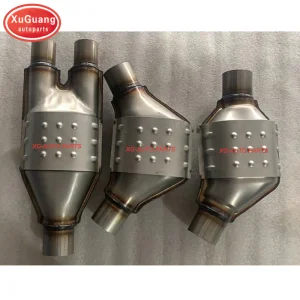
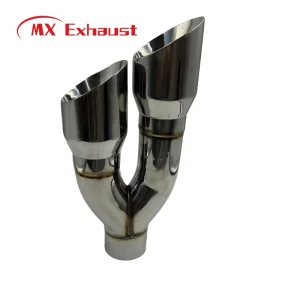
 GLX Auto Parts